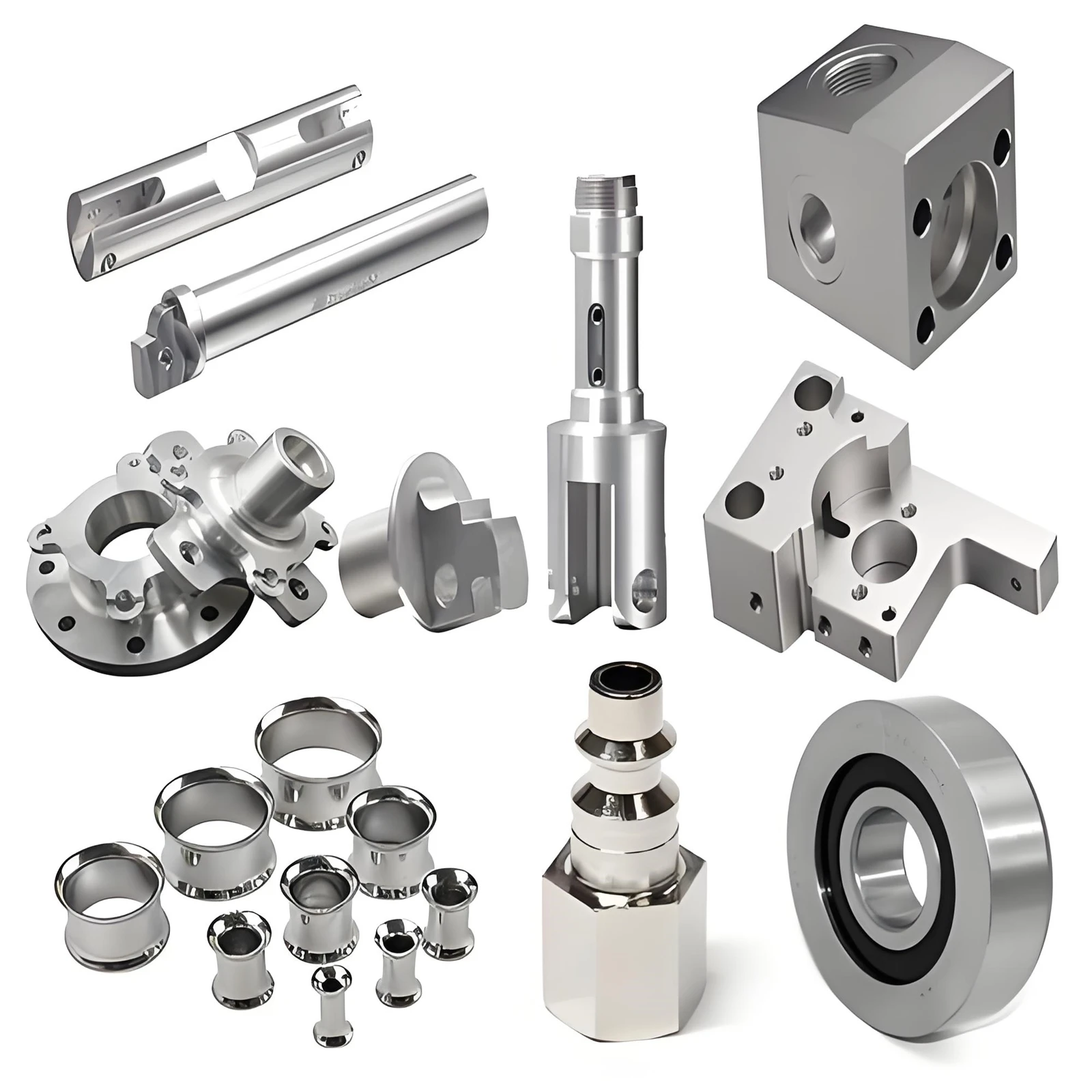

Shafts, sleeves, bushings, threaded connectors, rollers, and other rotational components are often well suited to cnc turning services. The process can produce external diameters, bores, faces, tapers, grooves, and threads in one planned machining sequence, helping buyers maintain dimensional consistency across prototypes and low-volume production.
Price is only one part of a sourcing decision. Part geometry, material machinability, tolerance requirements, surface finishing, inspection, and the supplier's ability to manage design changes all affect the final result. When sourcing cnc turning services china, an early drawing review can reveal features that increase setup time, require special tooling, or create unnecessary manufacturing risk.
Which Parts Are Suitable for CNC Turning?
During CNC turning, the workpiece rotates while a programmed cutting tool removes material. This makes the process particularly effective for parts whose primary geometry is organized around a center axis. Common examples include shafts, pins, sleeves, bushings, spacers, round connectors, threaded components, rollers, and rotating machine parts.
Turning can produce more than simple outside diameters. Depending on the design, the process can include facing, contour turning, form turning, taper turning, straight turning, parting, grooving, boring, drilling, reaming, threading, tapping, profiling, and knurling.
Parts containing large pockets, extensive flat surfaces, off-center holes, or complex features on several sides may also require CNC milling. Some cnc turned parts are completed almost entirely on a lathe, while others need a second machining operation. Selecting the process from the actual geometry is more reliable than selecting it from the part name alone.
Drawing Review Comes Before Machining
A useful production drawing should define dimensions, tolerances, material grade, threads, surface finish, and critical inspection requirements. A 3D model helps describe the geometry, but it may not communicate fits, datum structures, surface roughness, or acceptance criteria clearly enough for production.
During manufacturability review, engineers examine wall thickness, groove width, bore depth, thread relief, tool access, and the relationship between critical features. Very deep small-diameter holes, thin walls, narrow internal grooves, and threads without adequate relief can limit tool selection or increase machining time.
Tolerances should reflect the function of each feature. Bearing seats, sealing surfaces, and assembly interfaces may require tighter control, while non-mating surfaces can often use standard tolerances. Applying the same tight tolerance to every dimension increases machining and inspection work without necessarily improving part performance.
A capable cnc turning company should identify these issues before material is cut. This allows the buyer and machining team to adjust the design, tolerance, or inspection plan while changes are still relatively easy to make.
Material Selection Changes the Turning Process
Youde machines metals including aluminum, steel, stainless steel, copper, and brass. Available plastics include ABS, PP, PE, PMMA, acrylic, nylon, PC, POM, PET, PBT, and PEK. Each material requires a different combination of tooling, spindle speed, feed rate, cooling, and workholding.
Aluminum is commonly selected when buyers need low weight, efficient machining, and a clean finished surface. Stainless steel offers strength and corrosion resistance but can generate more heat and accelerate tool wear. Brass and copper are frequently used for fittings, conductive components, connectors, and precision instrument parts.
Engineering plastics require another machining strategy. Cutting heat and clamping pressure can affect dimensions, especially on thin-walled parts. A plastic sleeve may appear accurate while it remains clamped but change shape after it is released. Tool sharpness, cutting parameters, and inspection timing must account for this behavior.
Material specifications should include the exact grade rather than a general description such as aluminum, stainless steel, or plastic. Different grades within the same material family can have different strength, hardness, corrosion resistance, and machining characteristics.
Understanding Turning Tolerances and Part Size
Youde's published turning capability lists a standard tolerance of ±0.05 mm and a maximum manufacturing size of Ø200 × 600 mm, with custom requirements evaluated separately. These figures are useful for initial project screening, but achievable accuracy still depends on the part's diameter, length, material, wall thickness, geometry, and datum structure.
Long, slender shafts can deflect or vibrate during machining. Thin sleeves may distort under chuck pressure, while deep bores can be limited by tool rigidity and chip evacuation. A lathe machining services provider must evaluate these conditions before confirming the final tolerance.
Dimensional tolerance is only part of the quality requirement. Roundness, concentricity, cylindricity, perpendicularity, thread accuracy, and surface roughness may determine whether cnc turned parts fit and operate correctly. Drawings that require geometric control should identify the relevant datums and measurement method.
For mating components, buyers should also explain how the part will be assembled. Information about bearings, seals, shafts, housings, or threaded connections helps the machining team understand which dimensions affect function and which dimensions are less critical.
Prototype and Low-Volume Projects Have Different Priorities
Prototype production usually focuses on verifying dimensions, assembly, material behavior, and basic function. Quantities are small, and the design may still change after testing. At this stage, flexible cnc turning services can help engineers obtain physical parts without investing in production tooling.
Youde supports single prototypes and low-volume production. This allows a project to begin with a small quantity, complete dimensional and assembly checks, and move into a repeat order after the design has been approved.
Priorities change during low-volume production. Batch consistency, tool life, setup repeatability, cycle time, and inspection efficiency become more important. Programs, materials, tools, workholding positions, and inspection criteria should be controlled so that later batches remain consistent with the approved parts.
If the expected annual quantity may increase, buyers should share that information during the prototype stage. A cnc turning company can then consider workholding, tool selection, operation sequence, and inspection methods that remain practical when the project moves beyond the first samples.
Youde also provides rapid prototyping services for projects that may require CNC turning, CNC milling, 3D printing, vacuum casting, or sheet metal fabrication during different stages of product development.
Surface Finishing Must Be Included in the Tolerance Plan
Available finishing options listed by Youde include chrome plating, copper plating, passivation, anodizing, spray painting, deburring, nickel plating, sandblasting, polishing, silk screening, black oxide, and laser engraving. The suitable process depends on the base material, appearance, corrosion exposure, and functional requirements.
A finish can change more than the appearance of a part. Plating adds material to the surface, sandblasting changes the texture, and polishing removes a small amount of material. Threads, bearing seats, sealing surfaces, and precision bores may need masking or a calculated machining allowance.
Drawings should state whether a dimension is inspected before or after finishing. Color, gloss, texture, coating thickness, masking locations, and allowable cosmetic variation should also be defined where they affect acceptance.
When cnc turned parts require both close fits and a cosmetic finish, the machining and finishing requirements must be reviewed together. Treating them as separate purchasing steps can create dimensional problems at the end of the project.
How to Evaluate a CNC Turning Supplier
Start by checking whether the supplier's equipment and process range cover the required diameter, length, material, tolerance, and secondary features. A supplier should be able to explain how it will machine internal bores, grooves, threads, knurls, or cross-features rather than simply confirming that the part is possible.
The next step is quality control. Youde's turning service page lists ISO 9001:2015 and a standard turning tolerance of ±0.05 mm. Buyers who require inspection reports, material certificates, first-article approval, or records for critical dimensions should include those requirements in the inquiry.
Experience must also match the application. Youde lists automotive, electronics, consumer products, medical devices, and lighting among the industries served by its turning operations. Parts for these markets may place different demands on materials, dimensional consistency, cosmetic finish, traceability, and cleanliness.
When comparing cnc turning services china, buyers should look beyond the lowest unit price. A quotation should make clear what material, machining operations, finishing, inspection, packaging, and delivery assumptions are included. Two prices are not directly comparable when their quality and delivery scopes are different.
Questions to Ask a CNC Turning Company
Before placing an order, confirm how the supplier will hold the part, which features require separate operations, and how critical dimensions will be measured. For repeat orders, ask how the program, tooling, material, and inspection records will be controlled between batches.
It is also useful to ask whether any tolerances can be relaxed without affecting function. An experienced cnc turning company should be able to explain which requirements drive cost and which design changes could simplify production.
For lathe machining services involving thin walls, long shafts, deep bores, or fine threads, discuss the risks before production. These features do not automatically make a part unsuitable for turning, but they may require additional support, different tooling, slower cutting parameters, or another operation sequence.
What to Include in a Request for Quotation
A complete request should include a 3D model, 2D drawing, material grade, quantity, tolerances, surface finish, inspection requirements, and target delivery date. If the part mates with a bearing, seal, connector, shaft, or housing, mark the relevant fit dimensions clearly.
Youde's published lead time for standard turning projects is 5–8 working days. The website also states that quotations are typically returned within 24 hours and that expedited requirements can be evaluated. Actual delivery depends on material availability, part complexity, quantity, finishing, and inspection scope.
For overseas buyers evaluating cnc turning services china, shipping method and packaging should also be discussed before the order. Precision surfaces and threads may need individual protection to prevent contact damage during transportation.
Youde provides lathe machining services for prototypes and low-volume components in metals and engineering plastics. Its turning capabilities cover cylindrical surfaces, tapers, bores, grooves, drilling, reaming, tapping, and threading.
Buyers can review examples of precision cnc turned parts and contact Youde with drawings, quantities, material requirements, and finishing specifications. Starting with complete technical information makes it easier to confirm manufacturability, prepare an accurate quotation, and move from prototypes to repeat production with fewer revisions.
Tags: cnc turning services, cnc turning company, cnc turning services china, lathe machining services, cnc turned parts