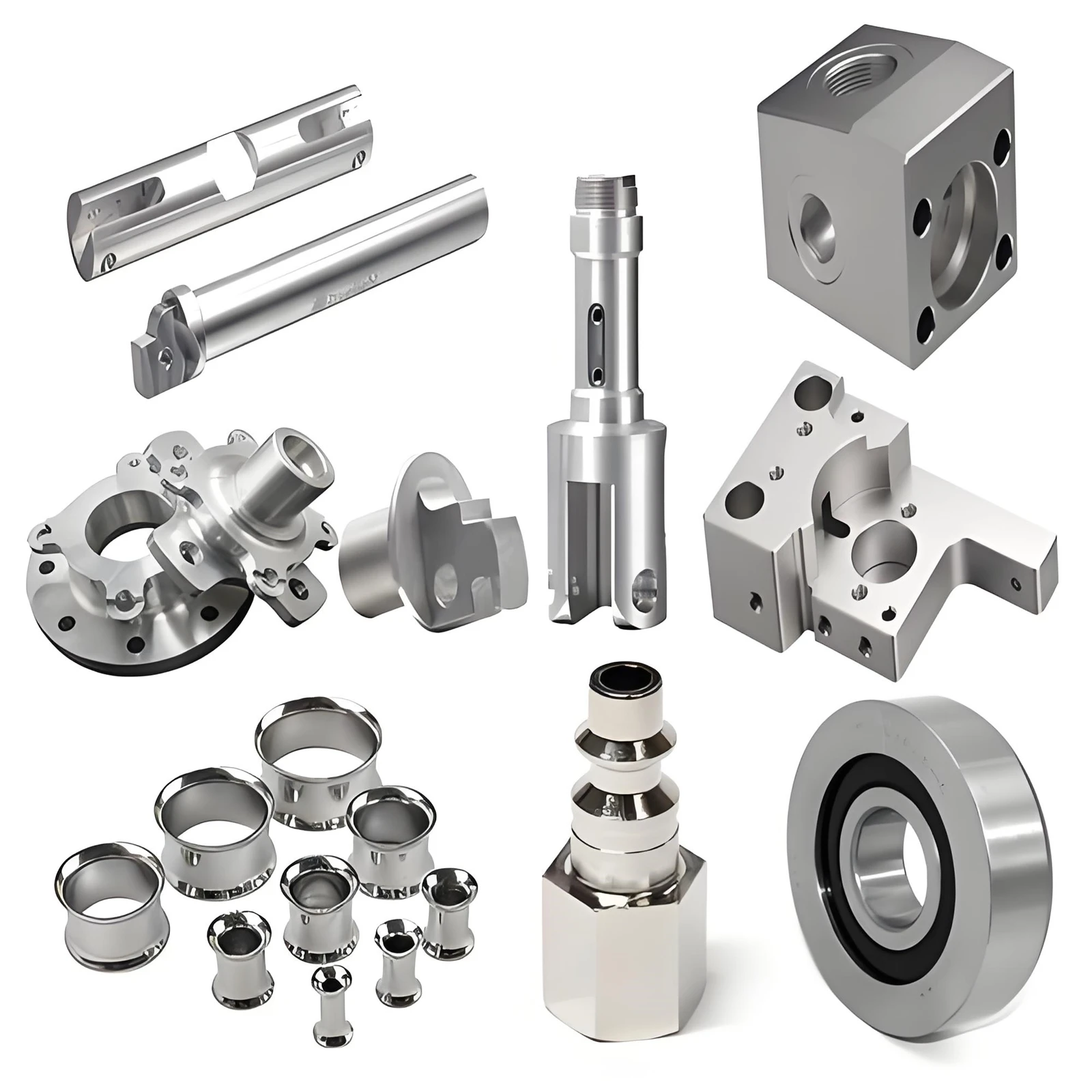

A CNC milling project can look straightforward at the RFQ stage. Send a CAD file, choose a material, enter a quantity, and wait for a price. The difficult part usually appears later, when a pocket is too deep for a rigid tool, a thin wall moves during cutting, or a critical dimension changes after anodizing. By that point, the lowest initial quote may no longer be the lowest-cost option.
Reliable cnc milling services begin with understanding how the part will function and how it can be machined consistently. Drawing review, material behavior, workholding, tool access, tolerance control, inspection, and finishing all affect the result. Buyers who evaluate these details before production are more likely to receive usable parts on the first run.
What Do CNC Milling Services Include?
CNC milling removes material from a fixed workpiece with rotating cutting tools. Depending on the geometry, the process can produce faces, slots, pockets, profiles, holes, threads, counterbores, and other features within a single machining plan. Typical operations include boring, countersinking, drilling, pocketing, profiling, reaming, and tapping.
The process is used for brackets, housings, heat sinks, mounting plates, fixtures, instrument components, and many other custom parts. Simple features may be completed efficiently on a 3-axis machining center. Parts with side holes, multiple orientations, or closely related features on several faces may benefit from 4-axis indexed machining because it can reduce manual repositioning.
Youde's cnc milling services support 3-axis and 4-axis indexed machining for metal and plastic components. The practical question is not how many axes appear in a machine description. It is whether the selected equipment, setup plan, and tooling are appropriate for the part's geometry and tolerance requirements.
Machining Strategy Starts Before the First Cut
Many production problems are already present in the design before material reaches the machine. A deep, narrow pocket may require a long-reach cutter with limited rigidity. Very thin walls can deflect under cutting force or move when the part is released from the fixture. A sharp internal corner may be impossible to create with a standard end mill, while a small-diameter deep hole can add substantial cycle time and breakage risk.
A capable cnc milling company should identify these issues during manufacturability review. In some cases, increasing an internal corner radius, adjusting a hole depth, or changing a noncritical tolerance can make the process more stable without affecting the function of the component. The purpose of this review is to establish a repeatable machining route before time and material have already been committed.
Setup planning matters as well. Every time a part is removed and repositioned, another opportunity for datum shift is introduced. That may have little effect on a basic plate, but it becomes important when several holes, faces, and pockets must maintain a close positional relationship. Good process planning keeps related features in the same setup whenever the equipment and geometry allow it.
Material Selection for Custom Metal Milling
Aluminum, steel, stainless steel, copper, and brass can all be milled, but they do not behave the same way during cutting. Material choice affects strength, corrosion resistance, weight, thermal or electrical performance, tool wear, cutting speed, finish, and price.
Aluminum is widely used for housings, brackets, heat-management parts, and structural components because it machines efficiently and offers a useful strength-to-weight ratio. Stainless steel provides strength and corrosion resistance, although heat generation and work hardening require more careful control. Copper is often selected for electrical and thermal applications, while brass offers good machinability for fittings and precision mechanical components.
For custom metal milling, the material description should be more specific than "aluminum" or "stainless steel." The RFQ should identify the alloy and material condition whenever possible. Aluminum 6061 and 7075, for example, do not have identical mechanical properties or cost. Stainless steel 304 and 316 may look similar on a material list, but project requirements can make one more suitable than the other.
Youde also machines engineering plastics, including ABS, PP, PE, PMMA, PET, acrylic, nylon, PC, POM, PPS, and PEK. Plastic cnc milling parts introduce different concerns around heat, clamping pressure, burr formation, and dimensional stability. A material that performs well in the finished product still needs a machining method suited to its behavior.
Practical Tolerances Cost Less Than Blanket Precision
Precision is one of the main reasons to use CNC milling, but applying the tightest possible tolerance to every dimension rarely improves the part. It does increase machining time, inspection work, tool-management demands, and scrap risk.
A better drawing separates function-critical features from general dimensions. Bearing locations, mating faces, dowel holes, sealing surfaces, and assembly datums may require tighter control. Noncritical outside dimensions can often use a more economical general tolerance without changing fit or performance.
Youde's published CNC milling capability lists a standard tolerance of ±0.05 mm and a maximum manufacturing size of 1200 × 1000 × 400 mm, with customized sizing considered for specific projects. These figures are useful starting points, not a promise that every geometry and material combination will achieve the same result. The achievable tolerance for cnc milling parts still depends on part size, wall thickness, feature relationships, material stability, setup strategy, and inspection method.
When a drawing contains tighter requirements, mark the critical dimensions clearly and explain their function. This allows the engineering team to determine whether the requested tolerance is practical and what inspection method will be needed. It also prevents extra cost from being added to dimensions that do not affect the assembly.
Surface Finishing Must Be Included in the Machining Plan
Milled parts may require anodizing, plating, passivation, painting, sandblasting, polishing, black oxide, laser engraving, or another secondary process. These treatments are often discussed as appearance options, but some can change dimensions or surface conditions.
Anodizing adds a coating layer. Polishing can soften an edge or remove a small amount of material. Sandblasting changes texture, and plated features may need allowance in the machining dimensions. Threads, electrical contact areas, sealing faces, and close-fitting surfaces may also require masking.
For this reason, finishing requirements should be included in the original RFQ. Specify the finish type, color, gloss or texture where relevant, cosmetic acceptance requirements, and any surfaces that must remain untreated. Youde coordinates a range of secondary operations, including anodizing, plating, passivation, spray painting, sandblasting, polishing, deburring, silkscreen printing, black oxide, and laser engraving. Confirming these details early helps keep finished cnc milling parts within the intended specification.
An Instant Quote Is Only as Good as the Input Data
Buyers searching for a cnc milling instant quote usually want a quick budget figure or an immediate comparison between suppliers. Automated quoting can be useful for standard parts, but a fast number does not always represent the final manufacturing cost.
Software can read overall dimensions, material, quantity, and some geometric features. It may not fully interpret datum relationships, special tolerances, difficult thin walls, cosmetic surfaces, inspection documents, or the dimensional effects of finishing. A quote that overlooks these requirements may need to be revised after an engineer reviews the drawing.
Youde currently states that free quotation requests are typically returned within 24 hours. This is an engineer-reviewed quotation process rather than an automated cnc milling instant quote. For custom parts, that review provides room to identify unclear requirements, evaluate machining risk, and confirm what is actually included before production begins.
An accurate quote should define the material grade, quantity, machining scope, tolerance basis, surface finish, inspection requirements, estimated lead time, and any assumptions. Comparing these details is more useful than comparing the first price displayed on a screen.
How to Evaluate a CNC Milling Company in China
When buyers search for cnc milling services china, price is often an important part of the decision. It should not be the only part. Communication, drawing review, process control, inspection, and the transition from prototype to repeat production all influence the final cost of ownership.
Start by confirming who will machine the components and which processes are performed directly or coordinated through qualified partners. Ask how the cnc milling company plans to hold the part, how many setups it expects, which dimensions it considers critical, and how those dimensions will be measured. The answers reveal more than a general statement about "high precision."
Quality documentation should match the needs of the project. A basic prototype may require dimensional verification of several important features. Repeat production, regulated applications, or complex assemblies may call for more detailed inspection records, material documentation, or first-article reporting. These expectations should be agreed upon before the order is placed.
Youde's CNC milling page lists ISO 9001:2015 as the applicable industry standard and identifies automotive, electronics, consumer products, medical devices, and lighting among its application areas. The service supports prototypes and low-volume work, with a published reference lead time of 5–8 working days. Actual timing depends on geometry, quantity, material availability, finishing, and inspection requirements.
What to Send for a More Accurate Quote
A 3D model is valuable for programming and geometry review, but it does not always contain everything needed for production. A complete RFQ package should include:
- A 3D CAD file in a usable format
- A 2D drawing with dimensions, datums, and tolerances
- The material grade and condition
- Order quantity and expected repeat demand
- Surface finish and cosmetic requirements
- Critical dimensions and inspection needs
- The required delivery date
If a component will move from prototype to recurring production, include the expected future volume as well. This helps the supplier consider workholding, cycle time, and process stability rather than planning only for a single sample.
For buyers who need rapid prototyping services, CNC milling can provide functional parts in production-grade metals and plastics without the tooling investment required by molding. The same process can then support low-volume production, provided that fixtures, inspection, and repeatability are considered as quantities increase.
From a Successful Sample to Repeatable Production
One acceptable sample proves that the geometry can be made. It does not automatically prove that the process will remain stable across a larger batch. Tool wear, fixture repeatability, material variation, machine condition, and process drift become more visible as production continues.
Before approving repeat orders, confirm which dimensions will be monitored, how the first article will be checked, and whether the production route matches the approved sample. For cnc milling parts used in assemblies, consistent datum control can be more important than achieving an exceptional measurement on one isolated component.
The most useful cnc milling services combine machining capability with clear technical communication. Buyers should know what the quote includes, which requirements create risk, how the parts will be inspected, and what may change when quantity increases. That clarity reduces surprises after the order has already entered production.
If your 3D files, drawings, material specifications, quantities, and finishing requirements are ready, request a CNC milling quote. A complete RFQ allows the engineering team to review manufacturability, identify missing information, and propose a practical route for prototypes or low-volume production.
Tags: cnc milling services, cnc milling company, cnc milling parts, custom metal milling, cnc milling services china, cnc milling instant quote