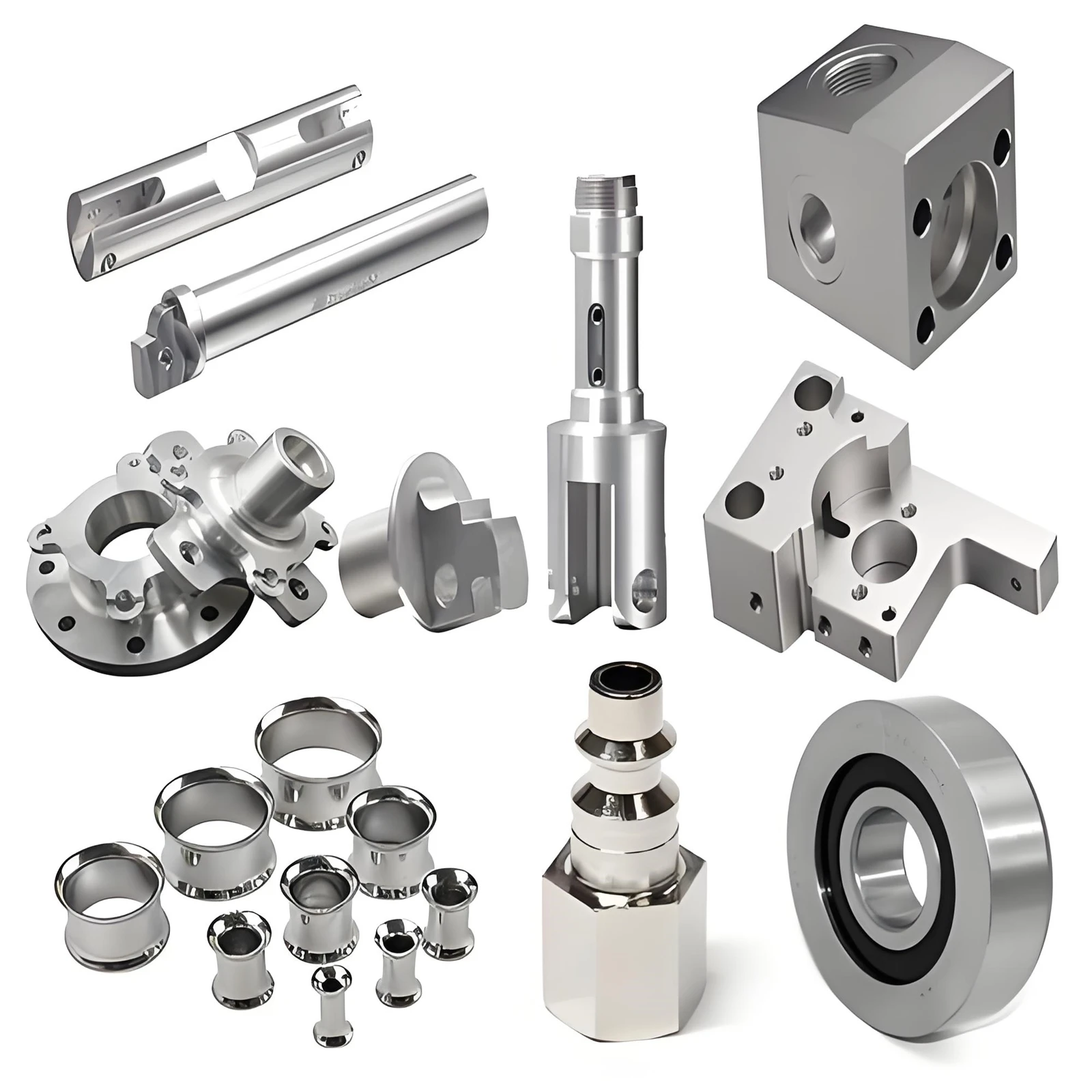

For overseas buyers sourcing custom metal or plastic parts, China remains one of the most important CNC machining hubs in the global supply chain. The difficult part is no longer finding a supplier. It is figuring out which CNC machining company, manufacturer, supplier, factory, or machine shop is actually suited to the job.
Price matters, but it is rarely the only number that matters. Once a project involves tight tolerances, complex geometry, special materials, or repeat production, the real cost starts to depend on much more than the quoted unit price. Machine capability, engineering experience, inspection methods, material traceability, communication, and production consistency all have a direct impact on whether the project runs smoothly.
That is the real sourcing question behind searches for CNC machining China. Finding a factory is easy. Finding one that can support the same part from prototype through repeat production is much harder.
Why China Is Still a Major CNC Machining Base
Cost used to be the main reason companies outsourced CNC machining to China. That is no longer the whole story.
Over the past several years, many Chinese machining companies have invested heavily in multi-axis equipment, metrology, quality systems, and engineering support. As a result, the market has moved beyond simple low-cost machining. A growing number of suppliers now handle complex components, tight-tolerance parts, prototype development, and low- to medium-volume production for international customers.
This is especially useful for product development teams. A new project may begin with five or ten parts for fit checks and functional testing, then move into dozens or hundreds of pieces once the design is approved. Changing suppliers between those stages can create unnecessary risk because the machining strategy, fixtures, datum scheme, and inspection approach may all change.
A capable custom CNC machining China supplier should therefore be able to support more than the first prototype. The real value is continuity from early development into stable production.
Manufacturer, Supplier, Factory, or Machine Shop?
Buyers searching for Chinese machining partners often encounter terms such as CNC machining manufacturer, CNC machining supplier, CNC machining factory, CNC machining company, CNC machining shop, and CNC machine shop.
The terms overlap, but they are not always interchangeable.
A manufacturer or factory usually implies direct control over machines, operators, process planning, and production. A CNC machine shop is generally more focused on hands-on machining work, often for prototypes, custom components, and smaller production runs. A supplier may own its own facility, outsource some processes, or coordinate multiple manufacturing resources.
For a buyer, the label itself matters less than the answers to a few practical questions. Who is actually machining the part? What equipment will be used? How are critical dimensions inspected? Who reviews the drawing when something is unclear?
For precision CNC machining China projects, those details are far more useful than whatever title appears on a company website.
The Right Machine Matters More Than the Number of Machines
A large equipment list does not automatically mean a shop is the right fit. The more important question is whether the available machines suit the geometry and tolerance requirements of the part.
Simple faces, holes, pockets, and profiles can often be produced efficiently on a 3-axis machining center. Parts with multiple machining directions, side features, complex contours, or closely related geometric features may benefit from 4-axis or 5-axis machining.
The main advantage of 5-axis machining is not simply that the machine has more axes. In many cases, it reduces the number of setups.
Every additional setup creates another opportunity for datum shift and positioning error. That may be acceptable on a straightforward component, but it becomes more important when several holes, surfaces, and features must hold a close positional relationship to one another.
Youde currently supports 3-axis, 4-axis, and 5-axis milling, along with multi-axis turning and Swiss-type machining. For selected critical features, tolerances can reach ±0.005 mm.
That does not mean every dimension should be specified at ±0.005 mm. Tight tolerances increase machining time, inspection time, tool wear, and scrap risk. A good CNC machining manufacturer should be able to distinguish between dimensions that are truly function-critical and those that can use a more practical tolerance.
That distinction can save a significant amount of cost without changing how the part performs.
Many Machining Problems Start Before the Machine Turns On
A surprising number of CNC problems are already built into the design before machining begins.
A deep, narrow pocket may require a long-reach tool with poor rigidity. Very thin walls can move under cutting forces. Sharp internal corners may not be achievable with standard milling tools. Deep small-diameter holes can also add substantial time and process risk.
If these issues are identified only after production starts, the cost of fixing them is usually much higher.
That is why DFM, or Design for Manufacturability, matters in custom CNC machining China projects. Before cutting material, an experienced engineer should review geometry, critical tolerances, datum structure, tool accessibility, material behavior, and finishing requirements.
Good DFM is not about changing a product simply to make life easier for the machine shop. It is about finding design choices that preserve function while avoiding unnecessary manufacturing difficulty.
Sometimes a small change to a corner radius, hole depth, wall thickness, or tolerance can make a major difference to machining stability and cost. That kind of engineering input is one of the clearest signs that a CNC machining company is doing more than simply quoting drawings.
Precision Machining Has to Be Measurable
"High precision" is one of the most common phrases in CNC marketing, which is exactly why buyers should treat it carefully.
If a drawing calls for ±0.01 mm, ±0.005 mm, or strict controls on flatness, perpendicularity, concentricity, or position, the supplier needs inspection capability that matches those requirements.
Youde operates under ISO 9001:2015 and AS9100 quality systems and uses Zeiss and Hexagon CMM equipment for dimensional inspection. Its quality process also includes First Article Inspection, SPC, and material batch traceability.
The value of those systems is not the certification language itself. It is the ability to turn "the part is accurate" into something measurable and traceable.
For aerospace, robotics, medical equipment, and precision automation projects, buyers may need more than a visually acceptable component. They may need to know the material batch, inspection result, production lot, and process history behind that part.
That level of verification is what separates real precision machining from a generic "tight tolerance" claim.
Material Experience Matters More Than a Material List
A CNC parts manufacturer may say it can machine aluminum, stainless steel, copper, titanium, and engineering plastics. The more useful question is whether the shop has repeated experience with the specific material and geometry involved in the project.
Different materials behave very differently under machining.
Aluminum 6061 and 7075 are efficient to cut, but thin sections can distort because of residual stress and clamping. Stainless steels such as 304 and 316 are more prone to work hardening and require careful control of tooling and cutting conditions. Titanium has poor thermal conductivity, which makes heat management and tool wear more demanding. Engineering plastics such as POM, PEEK, and nylon introduce their own issues around thermal movement, workholding, and dimensional stability.
So "can you machine this material?" is only the starting question.
A better question is whether the supplier has machined that material in parts with similar wall thickness, tolerances, geometry, and finishing requirements.
That is where experience begins to show.
Surface Finishing Should Be Considered Before Machining Is Finished
Many CNC components require additional finishing after machining, including anodizing, bead blasting, polishing, plating, PVD coating, powder coating, passivation, or black oxide.
These processes are often treated as the final cosmetic step. In practice, some of them affect dimensions and should be considered much earlier.
Anodizing adds coating thickness. Bead blasting changes the surface condition. Polishing can alter edges and local geometry. Functional faces may also require masking before finishing.
If those requirements are discussed only after the machining stage is complete, a part can be dimensionally correct before finishing and out of tolerance afterward.
A mature CNC machining supplier should therefore look at machining and finishing as one connected manufacturing process. For tight-fit or appearance-critical parts, that coordination is essential.
A Good Prototype Does Not Guarantee Good Production
Making one good sample proves that the part can be made. It does not prove that the process is stable.
Once quantities increase, other variables begin to matter: tool wear, machine condition, fixture repeatability, material batch variation, machining parameters, and process drift.
This is where some projects fail. The first set of samples looks excellent, but consistency drops when production volume increases.
When evaluating a CNC machining factory, buyers should ask how the supplier controls that transition. Are prototype and production parts made using the same or a validated process route? How are critical dimensions monitored? How is tool wear managed? Is FAI performed? Is SPC used for key characteristics during production?
Those questions are less glamorous than asking for the "best tolerance," but they reveal much more about process control.
Communication Is Part of Manufacturing Capability
In international CNC projects, some of the most expensive mistakes come from interpretation rather than machining.
A 2D drawing may conflict with the 3D model. A thread specification may be missing. The finish may not be clearly assigned to specific surfaces. A dimension that is critical to the customer may look ordinary on the drawing.
A supplier that simply follows the files without asking questions can still produce the wrong part.
A reliable CNC machining company should identify ambiguity before machining begins and raise technical questions while there is still time to solve them cheaply.
Youde has been involved in CNC machining since 2005 and began expanding its overseas business in 2009. In addition to CNC machining, the company also provides rapid prototyping, vacuum casting, 3D printing, sheet metal fabrication, and related finishing services.
For product development teams, the benefit is not simply having more services under one roof. It is reducing the number of supplier handoffs between prototype, validation, and production, which helps preserve process knowledge and lowers communication risk.
How to Tell Whether a Chinese CNC Factory Is Worth Quoting
One of the most effective ways to evaluate a new supplier is to send a real part rather than relying on a marketing page.
Provide the 3D CAD file, 2D drawing, material, quantity, finishing requirement, and critical tolerances, then pay attention to the response.
If a relatively complex part receives an immediate low price with no technical questions, that may not be a good sign.
An experienced engineering team will often ask which features are critical, whether the material condition is specified, whether a deep hole can be modified, whether coating thickness needs to be included in final dimensions, or whether production quantity will change the process plan.
Those questions show that the supplier is thinking about how to manufacture the part, not just how to submit a quotation.
For a precision CNC machining China project, that engineering engagement can be more valuable than the first number on the quote.
The Lowest Quote Is Not Always the Lowest Cost
CNC sourcing should ultimately be evaluated on total cost, not unit price alone.
A part that is 10 percent cheaper becomes expensive very quickly if it leads to rework, replacement shipping, assembly failure, delayed testing, or production downtime. For critical or precision components, consistency, inspection, traceability, and response speed often matter more than saving a few dollars on each part.
That is why experienced sourcing teams do not automatically select the cheapest CNC machining supplier. They look for the supplier most likely to reproduce the same result, batch after batch.
In the End, the Part Should Drive the Supplier Choice
There is no CNC machine shop that is automatically best for every project.
A simple aluminum bracket may not need 5-axis machining. A complex aerospace component may require multi-axis processing and strict inspection. A cosmetic enclosure may be driven by finish quality, while a robotic joint may depend more heavily on positional tolerance, concentricity, and repeatability.
The best CNC machining manufacturer is therefore not the company with the longest equipment list or the lowest price. It is the one whose process capability matches the actual part.
Does the shop have the right equipment? Has it worked with similar materials and geometries? Can it hold the required tolerances consistently? Can it prove that with inspection data? Can it maintain the same process from prototype to production? Will its engineering team identify manufacturing risks before they become production problems?
If those questions have clear answers, price becomes a much more meaningful basis for comparison.
Based in Dongguan, China, Youde provides 3-axis, 4-axis, and 5-axis milling, multi-axis turning, Swiss-type machining, inspection, and finishing support for custom and precision parts. For companies searching for a CNC machining supplier, CNC machining factory, CNC machining shop, CNC machine shop, or CNC parts manufacturer in China, the most useful first step is still the same: start with the actual drawing.
Providing the material, quantity, critical tolerances, finishing requirements, and application context gives the engineering team enough information to build a more accurate process plan and a more meaningful quotation.
Tags
CNC Machining China, CNC Machining Manufacturer, CNC Machining Supplier, CNC Machining Factory, CNC Machine Shop, Precision CNC Machining, Custom CNC Machining, CNC Parts Manufacturer