


My first rapid prototype order taught me the real cost of the wrong process choice. I had a housing that needed to be handled, assembled and dropped on a table about fifty times - and I sent it to 3D printing because the quote was cheap and the lead time was short. It arrived fast, and it snapped on the third assembly test. The material wasn't wrong for the print. The process was wrong for the test I was actually running.
That's the thing about rapid prototyping services that the brochures skip: "rapid" is about getting the right part quickly, not just any part quickly. The whole point is to validate a design before you commit to tooling or production - and that only works if the prototype is made the right way, from the right material, at the right stage of your project. This guide is the map I use to get there.
What Rapid Prototyping Services Actually Cover
Rapid prototyping is a set of manufacturing processes that turn a CAD model into a physical part fast, without making a mold. Four processes carry most of the work, and each one exists for a reason:
CNC machining - cutting a part from solid material. The closest thing to a production part, with real material properties. Best when the prototype has to behave like the final part.
3D printing - building a part layer by layer. Best for complex internal geometry, quick visual checks, and shapes machining can't reach easily.
Vacuum casting - casting parts in silicone molds from a master. Best when you need a small batch (roughly 10–50 pieces) that looks and feels like molded production parts.
Sheet metal fabrication - cutting and forming flat metal. Best for enclosures, brackets and chassis that are designed as sheet metal from the start.
A good rapid prototyping service isn't the one that owns one machine. It's the one that can route your part to the right process - and tell you when your request is asking the wrong question.
Choosing the Process: Match It to the Test You're Running
Every prototype exists to answer a question. The process should match the question, not the cheapest quote. Here's how the options compare:
CNC machining - best for: functional tests, fit checks, parts that must behave like production. Materials: aluminum, steel, stainless, brass, titanium, plastics. Lead time: days, depending on complexity.
3D printing - best for: complex geometry, early design review, visual models. Materials: plastics and resins, some metals. Lead time: fastest for complex shapes.
Vacuum casting - best for: small batches with molded-part look and feel. Materials: polyurethane resins (rubber-like to rigid). Lead time: slightly longer, needs a master first.
Sheet metal - best for: enclosures, brackets, chassis, structural panels. Materials: steel, aluminum, stainless. Lead time: days.
The practical question is always: what am I testing? Form, fit, function, or all three? A visual check doesn't need CNC. A load test doesn't need 3D printing. Getting this decision right is where the money and the time actually are.
Prototype Stages: One Prototype Is Rarely Enough
Most products go through a few rounds, and each round earns a different process:
concept prototype - fast and cheap, often 3D printed, to check looks and basic layout.
design validation - closer to the real material, to test fit, assembly and basic function.
engineering prototype - machined or cast from production-like material, for functional and durability testing.
pre-production / pilot - small-batch runs, often vacuum cast or low-volume machined, to prove the design can be made repeatably.
Spending a little more on the right process at the right stage beats spending less on the wrong one twice. A prototype that fails because it was the wrong process tells you nothing about your design.
Materials: Match the Prototype to the Production Intent
Prototype material should be chosen by what you need to learn, not by what's cheapest. The common options:
Aluminum (6061, 7075) - where it fits: functional metal parts, housings, brackets. Notes: the default for metal prototypes; machines fast, close to production properties.
Steel / stainless steel - where it fits: load-bearing parts, fasteners, medical and marine. Notes: strong and weldable; stainless when corrosion matters.
Brass / copper - where it fits: electrical, fittings, decorative precision parts. Notes: great machinability, good for threaded and precision features.
Titanium / Inconel - where it fits: aerospace, medical implants, high-temperature parts. Notes: expensive and slower; spec only when performance demands it.
Engineering plastics (POM, PA, PEEK, ABS, PC, acrylic) - where it fits: bearings, insulators, casings, transparent parts. Notes: pick the grade by the property: wear, strength, temperature or clarity.
If the prototype is testing function, use the production material or the closest machinable equivalent. If it's only checking fit or look, a cheaper material is a legitimate engineering decision - not a shortcut.
Speed and Cost: What "Rapid" Really Means
Rapid prototyping is fast compared to making a mold, not compared to a magic wand. The honest expectations:
quoting - a responsive shop quotes within hours, not days, because it knows its machines and materials.
prototype lead time - simple parts in days; complex parts a little longer. Days, not weeks, is the standard for a capable service.
cost drivers - material, complexity, tolerance, quantity and finishing. Complexity and tolerance move price more than size does.
no-mold advantage - because no tooling is built, a single part or a small batch costs a fraction of the first molded production run.
If a quote takes a week to come back, that's not a rapid prototyping service, whatever the website says.
From Prototype to Small Batch: When the Same Shop Should Follow You
The best reason to pick a rapid prototyping service carefully is that most products don't stop at one prototype. After validation comes a pilot batch - tens of parts for field testing, certifications or a soft launch. Two things make that transition painless:
low-volume capability - a shop that does no-minimum-order machining and vacuum casting can produce pilot batches without tooling investment.
process continuity - if the prototype shop also runs milling, turning, sheet metal and finishing, your pilot parts stay with the team that already knows the design.
Consolidating prototype and pilot production in one shop removes a whole class of "it worked at the prototype stage, then changed at the pilot" problems.
Surface Finishing: Prototypes Need to Look Right Too
Appearance prototypes exist to win approval - from a client, a user, an investor. That's why finishing matters more than engineers like to admit:
painting - the most common finish; color and texture that match the intended production look.
sandblasting / bead blasting - a uniform matte surface that hides machining marks.
anodizing - for aluminum, adds color and a durable surface.
polishing - for transparent or reflective parts where clarity matters.
Tell the shop whether your prototype is structural or presentational. The finish is chosen by the audience, and a prototype shown to a client should not look like it came off the bench without a pass.
What We Do, and What I'll Tell You Straight
Full disclosure: this is where I work. Youde (YD Rapid) has been making rapid prototypes since 2005, expanding to foreign business in 2009 and running rapid prototyping for over 14 years. We cover CNC machining (3-, 4- and 5-axis, plus turning and turn-mill), 3D printing, silicone mold vacuum casting and sheet metal fabrication in one ISO 9001:2015-certified shop, with 80+ certified materials, over 50 pieces of production equipment, and more than 400 customers behind us.
Our promise is the boring-sounding one that actually matters: quotes within 4 hours, prototypes in days, no minimum order, and 24-hour service so your time zone isn't a blocker. We've machined over 200,000 custom parts, from single concept models to low-volume pilot batches, and we ship worldwide from Shenzhen.
But I'm not going to sell you 3D printing when you need CNC, or CNC when you need vacuum casting. Tell us what you're testing - form, fit, function, or a pilot batch - and we'll tell you which process earns your money, and which one just wastes it.
FAQ
Q1: What are rapid prototyping services?
A: Manufacturing services that turn a CAD model into a physical part quickly without making a mold - CNC machining, 3D printing, vacuum casting and sheet metal fabrication. They exist to validate a design before tooling and production.
Q2: How fast is rapid prototyping?
A: A responsive shop quotes within hours and delivers simple prototypes in days. Complex parts take longer. If a quote takes a week, you're not talking to a rapid prototyping service.
Q3: CNC machining or 3D printing - which should I use?
A: Use CNC when the prototype must behave like the production part in material and strength. Use 3D printing for complex geometry, quick visual models and early design checks. Match the process to the test you're running.
Q4: What is vacuum casting used for?
A: Small batches - roughly 10 to 50 parts - that need to look and feel like molded production parts without paying for a production mold. A master part is made first, then cast in silicone molds.
Q5: How much does rapid prototyping cost?
A: It depends on material, complexity, tolerance, quantity and finishing - not just size. Because no mold is built, a single part or small batch costs far less than the first molded run.
Q6: Can a rapid prototyping service also do production?
A: Many, including Youde, move from prototype to low-volume production - no-minimum-order machining and vacuum casting for pilot batches. Keeping prototype and pilot in one shop avoids the "it changed at the pilot stage" problem.
The Honest Version
The short version: rapid prototyping services are about getting the right part quickly, not any part quickly. Match the process to the test you're running, match the material to the property you need to learn, and expect quotes in hours and parts in days - not the other way around. Use the prototype stage to find design problems cheaply, and pick a shop that can follow you from concept to pilot batch without changing everything in between. Get that right, and the prototype is the cheapest insurance your product will ever buy.
Rapid Prototyping Services: How To Get A Working Part in Days, Not Weeks
Popular Products

Medical Prototype Machining
Medical prototype work sits at a critical point in device development. It is the stage where design intent must become

Medical Device CNC Machining
We supply medical device CNC machining for orthopedic implants, surgical instruments, diagnostic equipment, and
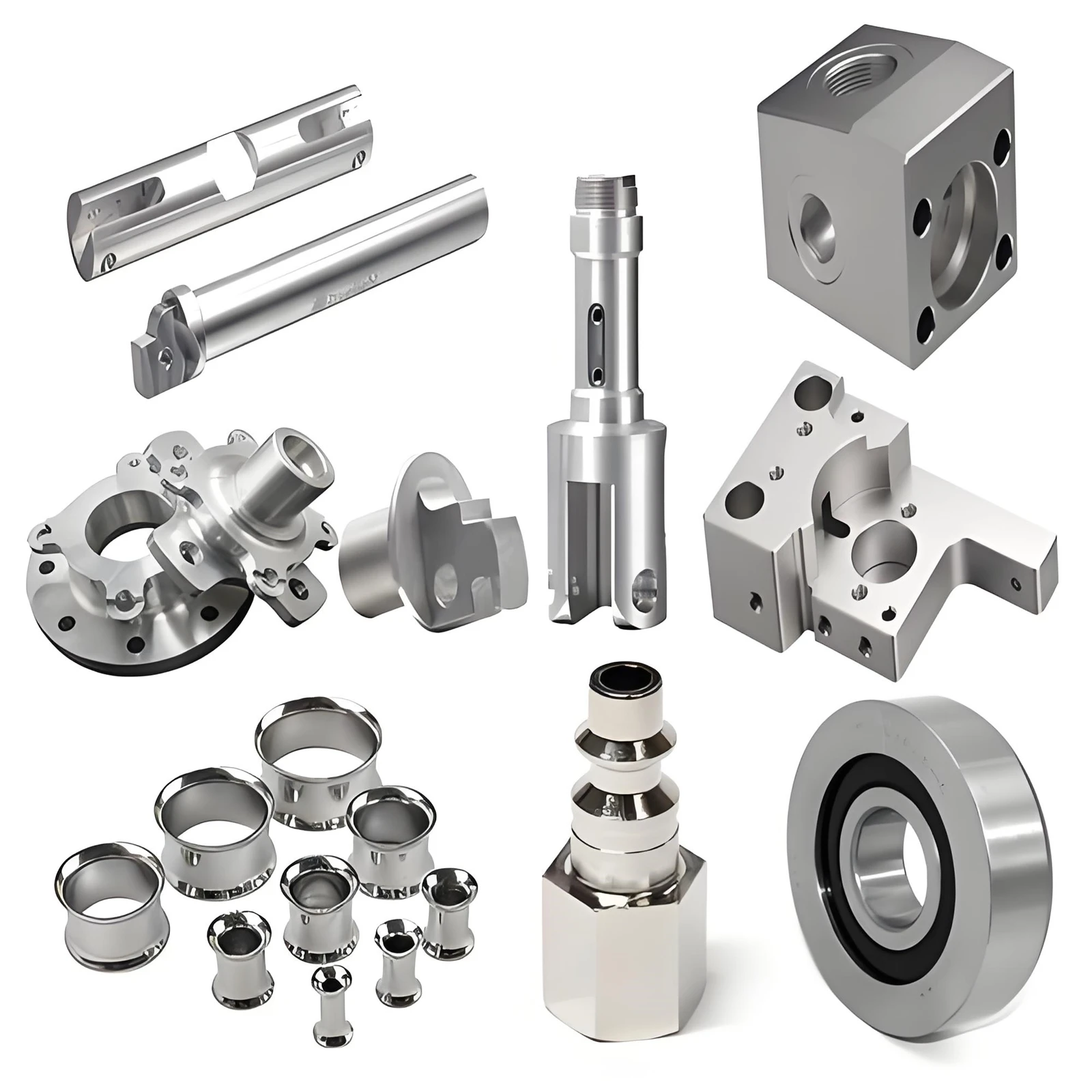
Aircraft CNC Machining Parts
Sourcing aircraft CNC machining parts comes with almost no room for error. A structural bracket out of tolerance by a

Tight Tolerance CNC Machining
Tight tolerance CNC machining delivers the dimensional precision required for the most demanding applications,
Stainless Steel CNC Parts Processing
We deliver high-quality stainless steel CNC parts to manufacturers in electronics, telecommunications, medical devices,

Aerospace CNC Machining Services
Our capabilities cover a wide range of materials including Aluminum (6061, 7075), Titanium (Ti-6Al-4V), Stainless