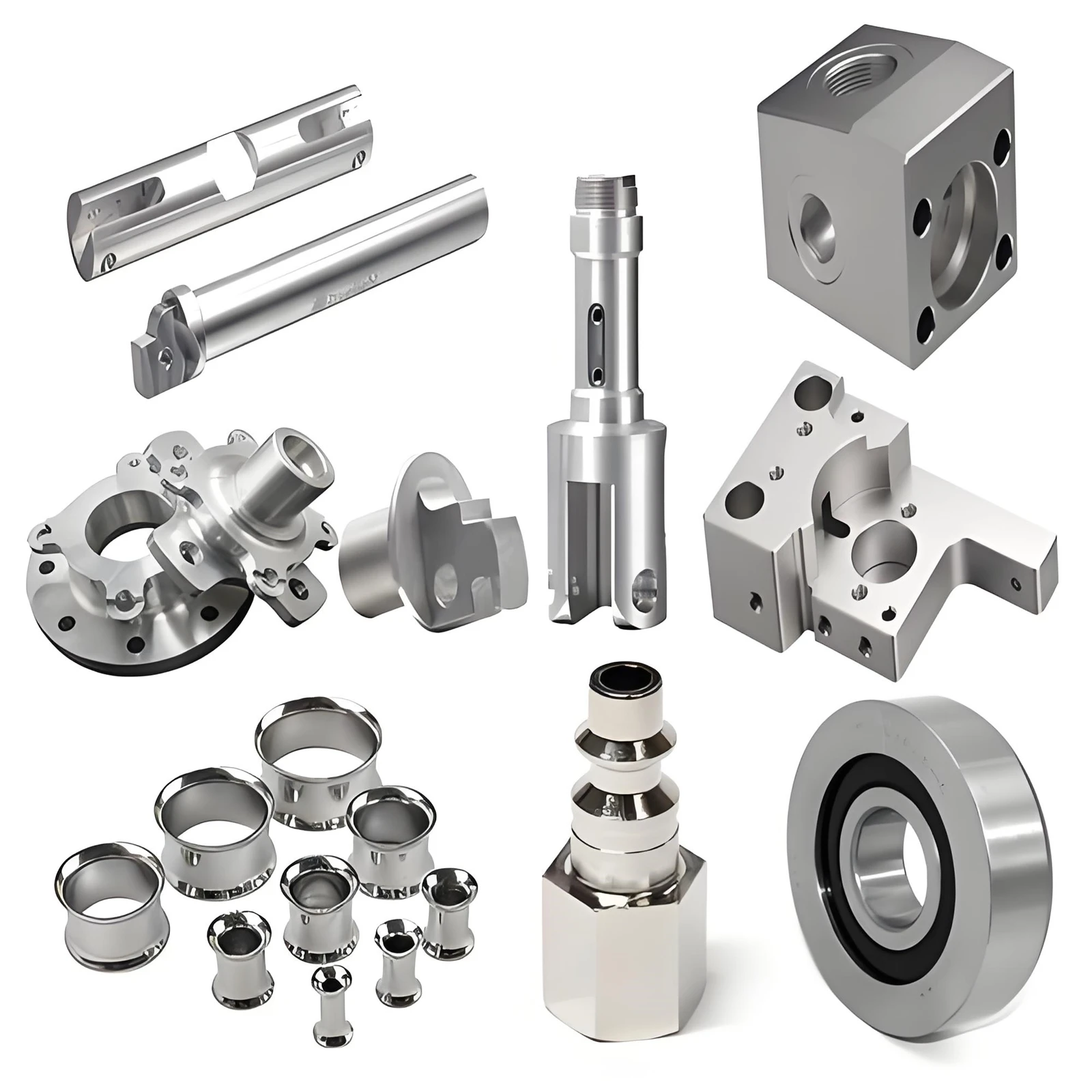

So you need ten parts, not ten thousand. Maybe it's a prototype to show investors, a short run to test the market before a full launch, or a custom bracket that no supplier wants to tool up for. Low volume CNC machining is where most engineers and product teams land in this situation, and usually for the same reasons: no molds, fast turnaround, and the freedom to change the design next week if the first batch reveals a problem.
This guide walks through when the low-volume route actually makes sense, what drives the cost per part, and how to pick a machine shop you won't regret calling back.
What "Low Volume" Covers in Practice
CNC machining removes material from a solid block using computer-controlled mills, lathes, and routers. "Low volume" simply means you're making a small quantity, generally anywhere from a single part up to a few hundred or low thousands. There's no universal cutoff, but in practice most shops treat anything under roughly 500 to 1,000 units as a low-volume job.
The key difference from mass production is that you're not paying for tooling. Injection molding, die casting, and forging all require expensive molds or dies upfront, and that cost only becomes worth it once the volume spreads it thin. With CNC, the setup cost is small, so a run of five parts costs a tiny fraction of what the same five parts would cost through a molded process.
When the Low-Volume Route Makes Sense
The short version: whenever the numbers don't justify a mold, or the design isn't final yet.
Common situations include:
Prototypes and proof of concept. You need a working part to test fit, function, or performance before committing to production tooling.
Small-batch market tests. You want fifty units in customers' hands before ordering fifty thousand.
Custom and legacy parts. A replacement gear, a special bracket, a one-off enclosure for a machine that's been out of production for years.
Bridge production. Your mold is still being built, but you need parts now to keep a launch date.
Highly complex parts. Some geometries are simply cheaper to machine than to mold, even at higher volumes.
One practical rule from shop owners: if your annual quantity sits below a few thousand and your part isn't a simple geometry produced in huge numbers, low volume CNC machining is usually the more economical route. Above that range, start doing the math on tooling.
What You Actually Gain (and Give Up)
The benefits are straightforward:
No mold investment. You pay for parts, not for a steel cavity that costs ten thousand dollars and takes eight weeks to cut.
Fast turnaround. A good shop can often quote and ship small runs in days, not months.
Material freedom. Machining works with aluminum, steel, stainless, titanium, brass, copper, and dozens of plastics. Over 80 certified materials is normal for a well-stocked supplier.
Design iteration. Found a weakness in the first batch? Change the CAD file and rerun. There's no tool to modify, so the cost of a design change stays low.
Tight tolerances when you need them. Quality shops hold ±0.01 mm on critical features, which covers most engineering requirements.
What you give up is economy of scale. Per-unit price for a 20-part run will always be higher than the per-unit price of a 20,000-part run, because setup, programming, and inspection time get spread across far fewer pieces. The tradeoff only makes sense if you're honest about what you're buying: flexibility and speed, not the lowest possible unit cost.
What Drives the Price Per Part
Understanding the cost structure helps you avoid sticker shock and design for a lower quote.
Material. Aluminum machines fast and is cheap. Stainless and titanium take longer and wear tools harder. Engineering plastics vary widely. If material isn't critical to your application, let the shop suggest the most machinable option that still meets your requirements.
Part complexity. Every feature costs time. Deep pockets, thin walls, tight internal corners, and complex 3D contours all add machining hours. A simple block with a few drilled holes is dramatically cheaper than the same size part with intricate geometry.
Tolerance. Specify ±0.1 mm where you can and reserve ±0.01 mm for mating surfaces and critical fits. Looser tolerances mean faster machining, fewer rejections, and a noticeably lower price.
Quantity. Most shops price in tiers. The first part is expensive because programming and setup dominate. The price per part drops quickly as quantity rises, so always ask for pricing at several quantities rather than a single point.
Surface finishing. Anodizing, powder coating, plating, and bead blasting add both time and outside processing. They're often necessary, but they're not included in the base machining price, so budget for them separately.
How to Get the Most From a Low Volume Run
The cheapest improvement you can make is a clean drawing package. Send full 3D models in STEP or IGES format, plus a 2D drawing with critical dimensions, tolerances, and surface finish callouts. Shops can often work from a model alone, but a drawing removes ambiguity and prevents expensive misunderstandings.
A few design-for-manufacturing habits pay off immediately:
Use standard material sizes and common grades, like 6061 aluminum or 304 stainless, unless your application demands otherwise.
Keep wall thicknesses reasonable. Very thin walls are slow to machine and easy to break.
Design for standard tooling. Internal corners need a radius; sharp inside corners are a red flag.
Specify threads with standard sizes instead of exotic pitches.
Ask for a design review before quoting if you're unsure. Good shops will flag problems before they cost you money.
Choosing a CNC Shop for Small Batches
Not every shop wants your low volume work, and the ones that do aren't all equal. Here's what separates the good ones:
No minimum order. Some shops refuse runs under a hundred parts. A shop that accepts single-piece and small-batch orders is a shop built for your kind of work.
Documented quality. Look for ISO 9001 certification and shops that provide inspection reports and material certificates with their shipments.
A real material library. If you need 17-4 PH stainless one week and Delrin the next, you want a supplier that stocks both, not one that has to order everything.
Honest lead times. Fast delivery matters, but a realistic promise beats a heroic one that slips by two weeks.
Responsive communication. When you're iterating on a design, a shop that answers questions in hours instead of days saves you more time than any other factor.
One example of this model in practice: youde-rapidcnc.com runs low volume CNC machining with no minimum order, tolerances down to ±0.01 mm, over 80 certified materials, and ISO 9001-certified processes, backed by more than 20 years of machining experience. Shops like that exist specifically to serve the prototype-to-small-batch crowd, and their quotes usually come back within a day.
Common Mistakes to Avoid
Comparing only unit price. A cheap quote with a two-month lead time can cost you more than a slightly more expensive quote that ships in a week.
Sending incomplete drawings. Missing tolerances or surface specs almost guarantees a rework loop. Spell out what matters.
Forgetting finishing lead time. Anodizing alone can add a week or more. Factor it into your schedule, not just your budget.
Skipping the quality check. For critical parts, ask for dimensional inspection reports and material certificates. It's a five-minute request that protects you from a batch of unusable parts.