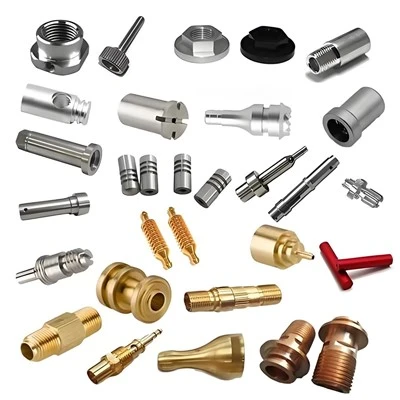

Material selection is one of the most critical decisions in developing high-performance CNC machining material electronic components. The chosen material directly influences precision, thermal management, EMI shielding effectiveness, dielectric properties, mechanical reliability, and overall production costs. In today's compact, high-power electronics - from 5G base stations and EV power modules to medical devices and aerospace avionics - suboptimal choices can lead to overheating, signal interference, premature failure, or excessive manufacturing expenses.
CNC machined electronic components demand tight tolerances, excellent surface finishes, and material properties that match functional requirements such as thermal conductivity, electrical insulation or conductivity, corrosion resistance, and machinability. Engineers and procurement managers must balance these factors while considering volume, budget, and supply chain realities.
Why Material Selection Matters in CNC Electronic Components Manufacturing
In electronic systems, materials are not just structural - they are functional elements that affect electrical, thermal, and mechanical performance.
Thermal management is paramount. High-power components generate significant heat; materials with high thermal conductivity (such as aluminum or copper) help dissipate it efficiently, preventing throttling or failure. Poor choices lead to hotspots and reduced lifespan.
EMI/RFI shielding requires conductive materials like copper alloys or aluminum to contain electromagnetic interference, protecting sensitive circuits. Dielectric constant and dissipation factor matter for insulating parts in high-frequency applications (e.g., 5G, RF).
Mechanical strength and precision ensure components withstand vibration, shock, and assembly stresses while maintaining tight tolerances (±0.01 mm or better) in precision CNC electronic parts.
Corrosion resistance and environmental stability are vital for outdoor, automotive, or medical use. Machinability affects cost, lead time, and achievable surface finish.
CNC machined electronic components often integrate multiple functions in one part, making material choice a multi-objective optimization problem. Early consideration during design prevents costly redesigns. Data from ASM and MatWeb consistently show that proper selection can improve thermal performance by 20-30% and reduce overall costs through better manufacturability.
In our experience supporting electronics clients, material-related issues account for a significant portion of prototype iterations and field returns. A structured selection process mitigates these risks.
Aluminum Alloys for CNC Electronic Components: 6061 vs 6063 vs 7075
Aluminum alloys dominate CNC aluminum heat sink material selection and enclosures due to their excellent strength-to-weight ratio, thermal conductivity, machinability, and corrosion resistance.
6061-T6 is the versatile workhorse. With tensile strength around 310 MPa, good weldability, and outstanding corrosion resistance, it machines cleanly and accepts anodizing well. Thermal conductivity is approximately 167 W/m·K. It suits general enclosures, brackets, and moderate heat sinks.
6063 excels in thermal applications, particularly extruded then CNC-machined heat sinks. It offers slightly higher thermal conductivity (around 200 W/m·K in some tempers) and better surface finish for aesthetic or convective efficiency, though lower strength than 6061.
7075-T6 provides superior strength (tensile ~570 MPa) for high-stress aluminum electronic enclosure CNC applications, such as ruggedized housings or structural frames. It trades some corrosion resistance and weldability for extreme performance but requires careful processing.
Comparison Table:
|
Property |
6061-T6 |
6063 |
7075-T6 |
|
Tensile Strength (MPa) |
~310 |
~240 |
~570 |
|
Thermal Conductivity (W/m·K) |
~167 |
~200 |
~130 |
|
Machinability |
Excellent |
Very Good |
Good |
|
Corrosion Resistance |
Excellent |
Excellent |
Fair |
|
Cost |
Low |
Low |
Higher |
|
Best For |
Enclosures, general parts |
Heat sinks |
High-strength structural |
CNC aluminum heat sink designs often start with 6063 for fins and 6061 for bases. Anodizing (Type II/III) enhances corrosion resistance and thermal emissivity. For best material for CNC electronic enclosure, 6061 frequently wins for its balanced properties.
Copper and Brass: Best Choices for Conductive and EMI Shielding Parts
Copper and its alloys shine in applications requiring high electrical and thermal conductivity plus EMI shielding CNC performance.
Oxygen-Free Copper (C101/C110) offers the highest conductivity (~390 W/m·K thermal, excellent electrical). It is ideal for high-current bus bars, heat spreaders, and RF components but is softer and more expensive.
Beryllium Copper (BeCu) combines high strength, fatigue resistance, and conductivity. It is widely used for spring contacts, connectors, and shielding where mechanical reliability under cycling is needed.
Brass (e.g., C360) provides good machinability, moderate conductivity, and corrosion resistance. It suits decorative or lower-shielding conductive CNC electronic parts like fittings and terminals.
These materials excel in EMI shielding CNC due to high conductivity, but galvanic corrosion must be managed when paired with aluminum. Surface finishes like nickel plating enhance performance. In high-frequency designs, copper's low resistivity minimizes losses.
Stainless Steel and Titanium CNC Parts for High-Reliability Electronics
For harsh environments, stainless steel CNC electronic and titanium deliver durability.
Stainless Steel (304/316) offers excellent corrosion resistance, strength, and hygiene for medical, food, or outdoor electronics. It provides moderate EMI shielding but lower thermal conductivity than aluminum. Machinability is fair, requiring proper tooling.
Titanium (Grade 5 / Ti-6Al-4V) provides the best strength-to-weight ratio, superior corrosion resistance, and biocompatibility. It suits aerospace, implantable medical devices, or extreme environments. Titanium CNC components are premium due to higher cost and slower machining.
Engineering Plastics: PEEK, Delrin, and PTFE for Insulating Electronic Parts
When electrical insulation, low dielectric constant, or chemical resistance is required, engineering plastics are indispensable.
PEEK (Polyether Ether Ketone) stands out for PEEK CNC machining electronic parts. It offers exceptional thermal stability (continuous use up to 260°C), high dielectric strength, low outgassing, and excellent chemical resistance. Dielectric constant is low (~3.3 at 1 MHz), making it ideal for high-frequency insulators, connectors, and 5G components.
Delrin (Acetal) provides good strength, low friction, and dimensional stability for gears, insulators, and structural non-conductive parts.
PTFE (Teflon) excels in ultra-low friction, chemical inertness, and dielectric properties for high-voltage or RF applications.
These plastics allow complex geometries via CNC but require sharp tools, proper fixturing, and annealing to control tolerances. They complement metals in hybrid assemblies.
Material Comparison Table: Quick Selection Guide for Engineers
|
Material |
Thermal Cond. (W/m·K) |
Electrical Conductivity |
Dielectric Constant |
Machinability |
Corrosion Resistance |
Relative Cost |
Best Applications |
|
Aluminum 6061 |
167 |
Good |
N/A |
Excellent |
Excellent |
Low |
Enclosures, Heat Sinks |
|
Copper C110 |
390 |
Excellent |
N/A |
Good |
Good (with plating) |
High |
Bus bars, Shielding |
|
Stainless 316 |
~16 |
Moderate |
N/A |
Fair |
Excellent |
Medium |
Harsh env. housings |
|
Titanium Gr5 |
~7 |
Low |
N/A |
Fair |
Outstanding |
Very High |
Aerospace, Medical |
|
PEEK |
0.25 |
Insulator |
~3.3 |
Good |
Excellent |
High |
High-freq insulators |
|
Delrin |
0.3 |
Insulator |
~3.7 |
Excellent |
Good |
Medium |
Gears, structural |
This table serves as a rapid reference. For best material for CNC electronic enclosure, aluminum 6061 is often the default starting point.
How to Work with a CNC Supplier to Finalize Material Choice
Successful outcomes depend on early collaboration. Share detailed requirements including operating temperature, environmental exposure, regulatory needs (RoHS, REACH), and target volumes.
DFM review is essential: suppliers can recommend alternatives that maintain performance while improving machinability or reducing cost. Request material certificates and prototype runs for validation.
For rapid prototype CNC electronic parts, start with aluminum or Delrin for speed, then validate before committing to PEEK or titanium for production.
Ask about process capabilities: 5-axis machining for complex geometries, in-house anodizing/plating for finishes, and inspection (CMM, conductivity testing).
A reliable CNC electronic components manufacturer will provide material recommendations backed by experience, helping optimize for both performance and scalability.
Choosing the right CNC machining material electronic components boils down to three core elements: functional performance (thermal, electrical, mechanical), manufacturability (machinability, tolerances, secondary processes), and total cost of ownership (material + processing + lifecycle).
Aluminum offers the best balance for most best material for CNC electronic enclosure and heat sink needs, copper/brass for conductivity and shielding, stainless/titanium for durability, and high-performance plastics like PEEK for insulation in demanding electronics.
By following a structured evaluation and partnering early with experienced suppliers, engineers can accelerate development, reduce risks, and achieve superior products.
Ready to optimize your next project? Contact our engineering team for a free DFM review and material consultation. Explore our capabilities for CNC machining material electronic components and request a quote today.
FAQ
Q: What is the best material for CNC electronic enclosure?
A: 6061 aluminum for most cases due to balance of properties and cost.
Q: When to choose PEEK over other plastics?
A: For high-temperature, high-frequency, or chemically aggressive environments.