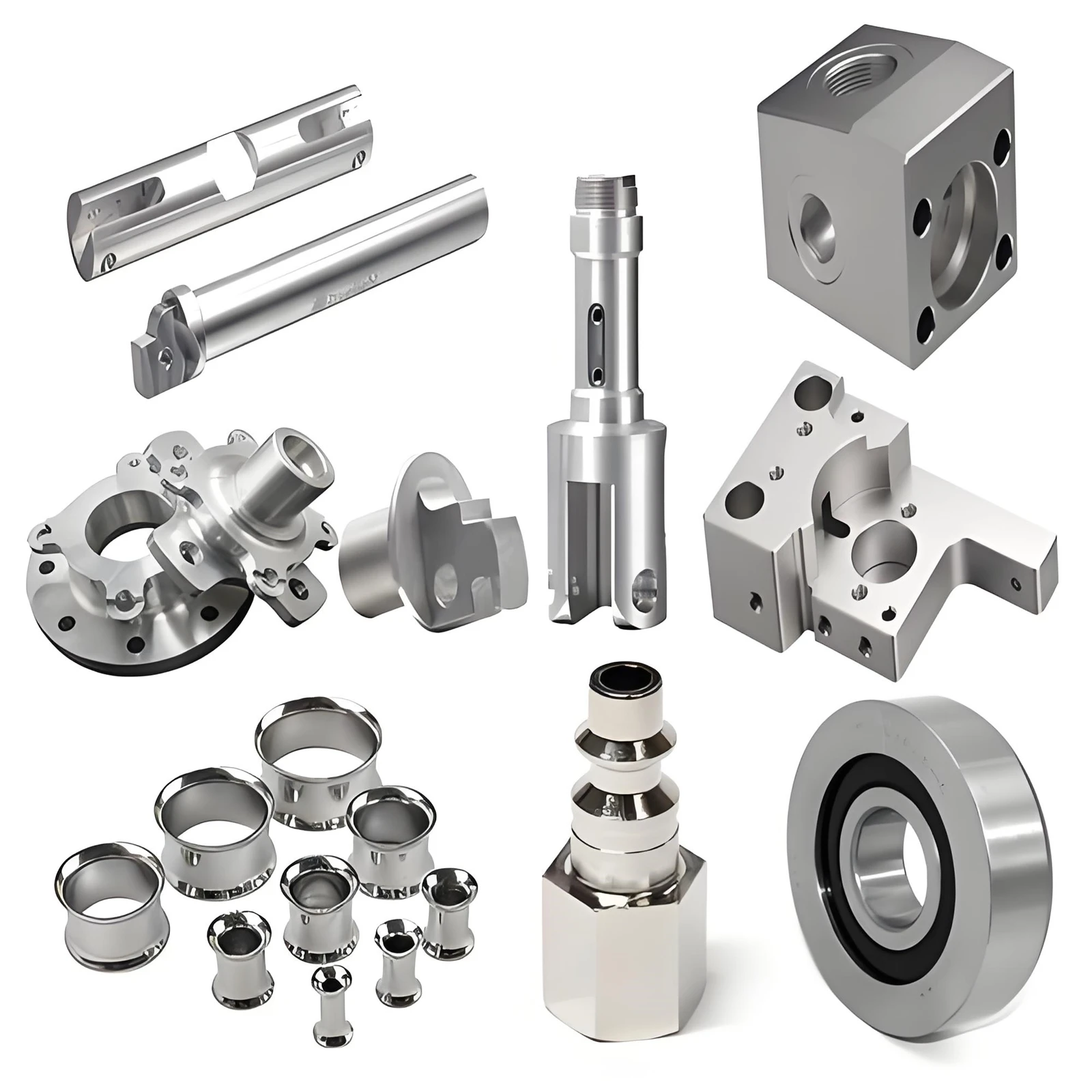

304 stainless steel is a common choice for machined components that need corrosion resistance, strength, clean appearance, and dependable performance. It is used for brackets, housings, shafts, fittings, manifolds, fasteners, equipment parts, and many other products. Yet a material being widely available does not mean it is easy to cut. 304 stainless steel machining requires stable workholding, sharp tools, controlled heat, and a cutting strategy that prevents the surface from hardening ahead of the tool.
For designers and buyers, the result depends on more than selecting "stainless steel" on a drawing. Material condition, feature geometry, tolerances, surface requirements, batch size, and inspection needs all influence the machining plan. This guide explains how 304 behaves during CNC milling and turning, what commonly goes wrong, and how to design and source parts more effectively.
What Is 304 Stainless Steel?
Type 304, also identified as UNS S30400 or EN 1.4301, is an austenitic chromium-nickel stainless steel. It is often called an 18/8 stainless steel because its nominal composition is centered around 18% chromium and 8% nickel. The chromium supports formation of a passive surface layer, while nickel helps maintain the austenitic structure and contributes to formability and toughness.
304 is selected for its balanced properties. It has good general corrosion resistance, good weldability, useful strength, and a surface that can be machined, brushed, polished, or passivated. It is not automatically the correct grade for every corrosive environment, however. Exposure to chlorides, aggressive chemicals, high temperatures, or application-specific regulations may point to 316, 304L, another stainless grade, or a different alloy.
Material form also matters in 304 stainless steel machining. Plate, bar, tube, forging, and cast stock can have different dimensional conditions, residual stress, grain flow, and machining behavior. The drawing or purchase specification should identify the required grade and applicable material standard instead of relying only on the label "304."
Why Is 304 Stainless Steel Machining Difficult?
Compared with free-machining steels or common aluminum alloys, 304 places greater demands on the tool and process. Four behaviors are especially important.
Rapid Work Hardening
304 becomes harder where it is plastically deformed. When a cutter rubs instead of shearing a proper chip, it can leave a hardened layer for the next pass. A worn tool, hesitant feed, repeated light cuts, or dwelling in a hole may make the problem progressively worse. The machine then needs more force, tool wear accelerates, and dimensional or surface-finish problems appear.
Heat Concentration
Austenitic stainless steel does not move heat away from the cutting zone as readily as many carbon steels. More heat remains near the tool edge and workpiece. If the process is unstable, this can shorten tool life, encourage adhesion, and make size control more difficult.
Tough, Continuous Chips
The material is ductile, so turning and drilling may produce long, stringy chips. Poor chip control can scratch the part, wrap around the tool, interfere with coolant, or force an operator to stop the cycle. Chip-breaker geometry, feed, tool path, and coolant delivery therefore play a direct role in safe and repeatable production.
Adhesion and Built-Up Edge
Material may adhere to the cutting edge and form a built-up edge. When that deposit breaks away, it can damage the edge or pull across the finished surface. Sharp, suitable tooling and a stable cutting load help reduce this behavior during 304 stainless steel machining.
How 304 Stainless Steel Machining Is Planned
A reliable process starts before the machine runs. The supplier reviews the 3D model and 2D drawing, identifies critical features, and decides how the part will be held and accessed. The plan should account for stock form, datum structure, wall thickness, deep pockets, holes, threads, finishing allowance, burr control, and inspection.
The general sequence is usually:
Verify the material grade and stock condition.
Select the machine, workholding method, and setup orientations.
Plan roughing so heat and cutting load remain controlled.
Leave a consistent allowance for semi-finishing or finishing where needed.
Machine critical features with stable tools and clear datums.
Deburr, clean, finish, and inspect the part against the drawing.
This sequence changes with geometry. A thin-walled housing may need balanced material removal and staged finishing, while a turned shaft may depend more heavily on chucking, length-to-diameter ratio, runout control, and support from a tailstock or steady rest.
CNC Milling in 304 Stainless Steel Machining
Milling may include facing, pocketing, contouring, slotting, drilling, reaming, chamfering, and thread production. The machine and fixture need enough rigidity to prevent chatter, because vibration repeatedly changes the cutting load and can damage both the surface and tool.
For 304 stainless steel machining, carbide end mills with geometry intended for stainless steel are a common starting point. A sharp positive cutting action reduces unnecessary deformation. Coating, flute count, helix, chip space, and edge preparation should match the operation, tool diameter, engagement, coolant strategy, and machine capability rather than being selected by material name alone.
Tool paths should maintain controlled engagement. Abrupt full-width entry into a pocket, sharp changes in direction, and excessive radial engagement can create load spikes. Ramped or helical entry, adaptive clearing, and a consistent chip load may improve stability when the machine, tool, and geometry support those methods.
Finishing requires a deliberate stock allowance. If roughing leaves an uneven amount of material, the finishing tool sees a changing load and may deflect. A consistent semi-finished surface makes final dimensions and appearance easier to control.
CNC Turning in 304 Stainless Steel Machining
Turning is used for shafts, pins, sleeves, bushings, fittings, threaded components, and other rotational parts. Insert geometry and chip control are central concerns. A sharp insert designed for austenitic stainless steel can reduce cutting forces, while an appropriate chip breaker helps prevent long chips from wrapping around the part or toolholder.
During 304 stainless steel machining, the tool should keep cutting rather than rubbing. Feed and depth of cut must be sufficient to work beneath any hardened surface left by the preceding pass, but they must also remain within the insert, machine, workholding, and part-stability limits. A constant depth of cut can reduce repeated contact at one line on the insert and help manage notch wear.
Slender parts require additional planning. Cutting forces and heat can deflect a long shaft, so the process may use support, balanced stock removal, multiple passes, or a revised operation order. Dimensions should be inspected in a controlled condition, especially where temperature can affect tight fits.
Drilling, Reaming, and Tapping in 304 Stainless Steel Machining
Holes are often the features where work hardening and chip evacuation become most visible. A drill that dwells, pecks without a suitable strategy, or loses coolant at the tip may encounter a hardened surface and trapped chips. The result can be rapid wear, oversize holes, poor straightness, or tool failure.
Drills should be sharp, rigid, and appropriate for stainless steel. Through-tool coolant can help carry heat and chips away when the machine and drill support it. Pecking is not automatically better: unnecessary re-entry may rub a hardened surface, while deep holes may still require a controlled chip-breaking cycle. Hole diameter, depth, tool design, coolant delivery, and chip behavior should determine the method.
Tapping adds torque and chip-control risk. The pilot hole, thread depth, tap style, coating, lubrication, and whether the hole is blind or through all matter. Thread milling may be considered when geometry, equipment, quantity, or risk makes it a better choice. Designers should provide relief at the bottom of blind holes and avoid calling for full threads to an inaccessible bottom surface.
Tooling and Cutting Parameters for 304 Stainless Steel Machining
There is no universal speed-and-feed table that is correct for every 304 stainless steel machining job. A recommended value for one carbide grade may be unsuitable for another. Tool diameter, coating, number of teeth, radial and axial engagement, tool overhang, machine rigidity, coolant, stock condition, and desired tool life all change the correct setting.
The following principles are more reliable than copying a single number:
| Process factor | Practical direction | Reason |
|---|---|---|
| Cutting edge | Use a sharp edge and suitable positive geometry | Reduces rubbing and unnecessary deformation |
| Feed | Maintain a real chip load; avoid hesitant feeding | Helps the edge cut below a work-hardened surface |
| Depth of cut | Keep it stable where possible | Limits repeated wear at the same insert location |
| Tool overhang | Keep tools as short as access permits | Improves rigidity and reduces chatter |
| Coolant | Deliver consistently to the cutting zone | Supports heat and chip control |
| Tool condition | Replace tools before severe wear develops | Worn edges increase heat, force, and work hardening |
Initial parameters should come from the tool manufacturer for the exact cutter, insert, material group, and operation. The machinist can then adjust them using spindle load, chip form, sound, surface condition, tool wear, and dimensional results. This is safer and more repeatable than presenting a broad internet value as a production recipe.
Preventing Work Hardening in 304 Stainless Steel Machining
Work hardening cannot be removed from the material's behavior, but it can be controlled. The key is to minimize rubbing and keep the cut stable.
Use a sharp tool suited to austenitic stainless steel.
Avoid dwelling against the workpiece.
Keep feed continuous through the cut when the tool path permits.
Select enough depth to cut below a previously hardened skin.
Prevent excessive tool runout and vibration.
Monitor wear instead of waiting for the tool to fail.
Plan drilling and re-entry moves so the edge does not repeatedly rub the same surface.
When 304 stainless steel machining becomes progressively noisier or requires increasing spindle load, simply slowing everything down may not solve the problem. The shop should check tool wear, runout, workholding, chip evacuation, coolant delivery, and whether the edge is cutting or rubbing.
Coolant, Chip Control, and Surface Quality in 304 Stainless Steel Machining
Coolant supports heat removal, lubrication, and chip evacuation. Its concentration, cleanliness, flow, and delivery direction affect performance. An intermittent stream that fails to reach the cutting edge may be less useful than consistent delivery. Some operations use flood coolant, through-tool coolant, mist, or other strategies, but the choice must fit the tooling, machine, operation, and workplace requirements.
Chip shape is also process feedback. Long tangled chips suggest that the selected geometry and cutting conditions are not breaking the chip effectively. Discolored chips, edge buildup, burrs, tearing, or a suddenly rough surface may indicate excessive heat, wear, vibration, or unstable engagement.
Surface finish is not determined by feed alone. Tool geometry, runout, spindle condition, step-over, fixture rigidity, stock condition, material adhesion, and the relationship between roughing and finishing all contribute. Cosmetic surfaces should be identified on the drawing so their machining direction and later finishing can be planned.
Tolerances and Dimensional Control in 304 Stainless Steel Machining
Achievable tolerance depends on feature size, geometry, stock condition, wall thickness, tool access, datum design, thermal stability, and inspection method. A blanket tolerance applied to every feature can increase cost without improving function.
Youde lists a standard CNC milling tolerance of ±0.05 mm, with tighter requirements reviewed for suitable parts. Its published CNC turning capability also lists a standard tolerance of ±0.05 mm. These values are useful for preliminary planning, but each 304 stainless steel machining project still needs a drawing review. Tight tolerances on thin walls, long bores, deep pockets, or features split across several setups may require a different process and inspection strategy.
Use tight limits where the part needs them: bearing seats, sealing faces, locating features, mating diameters, precision hole patterns, or controlled assembly dimensions. General surfaces can usually carry a wider tolerance. Clearly defined datums and appropriate GD&T help the manufacturer understand how critical features relate to one another.
Design Guidelines for Lower-Cost 304 Stainless Steel Machining
A few design decisions can make 304 stainless steel machining faster and more predictable.
Use Practical Internal Radii
Rotating cutters cannot make perfectly sharp internal corners. A larger internal radius allows a larger, stiffer end mill and reduces the need for slow finishing with a long, small-diameter tool. Where possible, make the corner radius slightly larger than the intended cutter radius so the tool does not remain fully engaged in the corner.
Avoid Unnecessary Deep, Narrow Features
Deep pockets and small corner radii require long tool reach. Tool deflection and vibration increase, while coolant and chip evacuation become more difficult. If the geometry is functional, discuss whether it can be opened, widened, split into components, or reached from another setup.
Control Thin Walls
Thin walls can move under clamping and cutting forces, then spring after release. Use adequate thickness where possible and identify which wall dimensions are critical. Balanced material removal, temporary support, staged machining, or custom fixtures may be needed.
Specify Only Functional Tolerances
Unnecessarily tight tolerances add finishing passes, tool changes, inspection time, and scrap risk. Distinguish critical dimensions from general dimensions and define surface roughness only where it affects sealing, friction, wear, appearance, or another real requirement.
Design Holes and Threads for Tool Access
Use standard sizes when they meet the function. Avoid extremely deep small-diameter holes, provide bottom clearance in blind holes, and specify realistic thread engagement. If a hole intersects a cavity or angled surface, ask for a manufacturability review because drill entry and exit conditions can affect accuracy and burr formation.
304 vs. 304L, 303, and 316 for Machined Parts
Material selection should follow the service environment and manufacturing requirements, not machinability alone.
| Grade | Main selection reason | Machining consideration |
|---|---|---|
| 303 | High machining volume where easier chip control is valuable | Sulfur improves machinability but reduces corrosion resistance and weldability compared with 304 |
| 304 | Balanced corrosion resistance, formability, weldability, availability, and cost | Work hardens and produces tough chips; needs controlled machining |
| 304L | Lower-carbon version used where welding and resistance to sensitization matter | Generally approached with similar machining care to 304 |
| 316 | Better resistance to pitting and crevice corrosion in many chloride environments | Often more demanding to machine and usually more expensive than 304 |
Changing from 304 to 303 solely to reduce cycle time may alter corrosion performance and weldability. Changing from 304 to 316 may improve suitability for a chloride-bearing environment, but it can raise material and machining cost. The part designer should confirm the applicable specification and environmental requirements before approving a substitute.
Surface Finishing Options
Parts may be used in the as-machined condition after deburring and cleaning, or they may receive a secondary finish. Common options for stainless steel parts include mechanical polishing, brushing, bead blasting, passivation, plating in suitable applications, laser marking, and other project-specific treatments.
Passivation is not a substitute for good machining and cleaning. The required process, appearance, protected features, and applicable standard should be stated in the RFQ. A cosmetic polish also needs a defined direction and acceptance standard. If dimensional features could be affected by finishing, machining allowance and masking must be considered before production.
Quality Control for 304 Stainless Steel Machining
Inspection begins with an unambiguous drawing. A suitable quality plan may include material documentation, first-piece inspection, in-process checks, final dimensional inspection, surface verification, and finishing records. The exact plan should reflect part risk, tolerance, quantity, and customer requirements.
Calipers and micrometers may be adequate for general dimensions. Height gauges, pin gauges, bore gauges, thread gauges, optical measurement, surface roughness instruments, or a coordinate measuring machine may be appropriate for other features. The instrument must have enough resolution and an appropriate method for the specified tolerance.
For repeat production, consistent 304 stainless steel machining also depends on tool-life control, documented offsets, stable fixtures, controlled inspection points, and traceable revisions. A sample that passes once is not enough if the process cannot hold the drawing throughout the batch.
Common Applications
Machined 304 parts appear in food-processing equipment, packaging machinery, automation systems, electronics, communications equipment, automotive assemblies, laboratory equipment, consumer products, pumps, valves, and general industrial machinery. Typical components include:
Housings, covers, and mounting plates
Shafts, spacers, pins, and bushings
Fittings, nozzles, valve bodies, and manifolds
Brackets, clamps, and structural hardware
Sensor bodies and instrument components
Jigs, fixtures, and machine replacement parts
Suitability still depends on the operating environment. "Stainless" does not mean immune to every form of corrosion, and a successful material in an indoor machine may be unsuitable for a chloride-rich or chemically aggressive service condition.
What Determines 304 Stainless Steel Machining Cost?
The quotation includes more than raw material. Programming, setup count, cutting time, tool consumption, fixture needs, inspection, finishing, quantity, and delivery requirements all contribute. Features that increase tool reach or work hardening risk can raise cost even when the part is small.
The main cost drivers are:
Stock size and the amount of material removed
Number of setups and datum transfers
Deep pockets, narrow slots, thin walls, and small internal radii
Hole depth, thread quantity, and difficult hole locations
Tight tolerances and controlled surface roughness
Custom fixtures or special tools
Inspection reports, material documents, and traceability
Passivation, polishing, marking, and other secondary work
Prototype quantity versus repeat or batch production
Before changing material, a design review may reveal simpler savings: widening an internal radius, opening a deep pocket, relaxing a noncritical tolerance, standardizing a thread, or arranging features for fewer setups.
Choosing a 304 Stainless Steel Machining Supplier
A capable supplier should be able to explain how it will manage work hardening, heat, chip control, tool wear, workholding, and inspection for the actual geometry. Generic claims about "high precision" are less useful than a clear process discussion tied to the drawing.
Ask the supplier to review:
Whether the specified grade and stock form are appropriate
Which features create the greatest machining risk
How many setups are expected
Which dimensions need in-process control
Whether the requested finish affects dimensions or lead time
What inspection documents will be supplied
Which design changes could reduce cost without changing function
Youde has provided CNC machining services since 2005 and supports custom parts in stainless steel and other metals, from prototypes through low-volume production. Available processes include CNC milling and turning, with multi-axis resources used when geometry requires another approach. Final capability, tolerance, price, and lead time are confirmed after reviewing the CAD model, drawing, quantity, material, and finishing requirements.
What to Include in an RFQ
For an accurate 304 stainless steel machining quotation, send both the 3D model and a controlled 2D drawing whenever tolerances, threads, fits, or finishes matter. STEP and IGES files can communicate geometry, while PDF or DWG drawings can define manufacturing requirements.
Include:
Material grade, product form, and applicable specification
Quantity and expected repeat demand
Critical dimensions, tolerances, datums, and GD&T
Thread standards, fits, and surface roughness
Deburring and edge-break requirements
Passivation, polishing, marking, or other finishes
Material certificates or inspection reports required
Cosmetic acceptance criteria
Packaging and target delivery date
Complete information allows the engineering team to identify risk early instead of building assumptions into the price.
Frequently Asked Questions
Is 304 stainless steel easy to machine?
It is machinable, but not as forgiving as free-machining steel, 303 stainless steel, or many aluminum alloys. Its tendency to work harden, retain heat near the cutting edge, form long chips, and adhere to tools requires suitable tooling and a stable process.
What is the biggest problem in 304 stainless steel machining?
Work hardening is one of the most common problems. If the tool rubs, dwells, or cuts with an unstable load, the surface can harden and make the following pass more difficult. Sharp tools, continuous cutting, controlled engagement, and timely tool replacement help manage it.
Is carbide or high-speed steel better for machining 304?
Carbide is commonly used in CNC production because it supports productive cutting speeds and good wear resistance. High-speed steel may still be used for selected drills, taps, low-speed operations, or specific shop conditions. Tool choice must account for operation, rigidity, coolant, diameter, quantity, and tool-manufacturer guidance.
Can 304 stainless steel be CNC milled and turned?
Yes. It can be milled, turned, drilled, reamed, tapped, and thread-milled. The correct machine and setup depend on whether the part is prismatic, rotational, multi-sided, thin-walled, or geometrically complex.
What tolerance can Youde hold on 304 stainless steel parts?
Youde publishes a standard tolerance of ±0.05 mm for CNC milling and turning. Tighter tolerances may be reviewed for suitable features. Achievable results depend on part geometry, size, wall thickness, datum structure, setup count, stock condition, and inspection requirements.
Should I choose 303 or 304 for a machined part?
Choose 303 when easier machining is valuable and its lower corrosion resistance and weldability are acceptable. Choose 304 when its broader balance of corrosion resistance, fabrication properties, and availability better matches the application. Do not substitute one for the other without an engineering review.
Is 304 suitable for marine parts?
That depends on the exposure. 304 may be acceptable in some mild environments, but chloride-rich and seawater conditions can require a more resistant material such as 316 or another alloy. Confirm the corrosion environment and applicable standard before ordering.
How can I reduce the cost of a 304 machined part?
Use practical internal radii, avoid unnecessary deep narrow pockets, specify standard holes and threads, limit tight tolerances to functional features, and design for fewer setups. Providing complete CAD, drawing, quantity, and finish information also reduces quotation uncertainty.
Request a Quote for Custom 304 Stainless Steel Parts
Effective 304 stainless steel machining starts with the drawing. Send Youde your 3D CAD file, 2D drawing, quantity, material specification, critical tolerances, surface requirements, and delivery target. Our engineering team will review machinability, setup strategy, inspection needs, and finishing requirements before confirming the quotation.
Tags: 304 stainless steel machining, machining 304 stainless steel, CNC machining 304 stainless steel, 304 stainless steel CNC machining, stainless steel machining, CNC machining stainless steel, 304 stainless steel machinability, 304 stainless steel machined parts, custom stainless steel machining