


1. Process principle: The main difference between cutting forming and material deformation
The stamping method uses a press machine to push the mould against the metal sheet with a lot of force, and it uses the material's plastic deformation to shape it. The core is in the mold's exact design. The mould cavity's geometric correctness directly affects how much the parts can vary in size. For example, stamping can make the curved shape and reinforcement structure of the iPhone's metal frame all at once. However, because the material is ductile, complicated structures need to be made step by step through several procedures.
Using programming, numerical control machining controls the tool path to cut, drill, mill, and do other things on the whole metal block. The five-axis linkage machining centre can machine spatial surfaces with very high accuracy, with tolerances kept within ± 0.01mm. The iPhone 6's aluminium rear cover has tiny injection moulded slots that are filled with plastic using NMT technology to make the signal overflow. Stamping technology makes it hard to make this complicated structure.
2. Cost Structure: The Game between Mould Investment and Equipment Depreciation
The cost curve for the stamping process shows a typical pattern of "high early stage, low margin." The cost of making the mould is 60% to 70% of the entire cost of the project. For example, the cost of a single set of automotive-grade precision moulds can be between 500,000 and 2 million yuan. But when mass manufacturing starts, the cost of each piece goes down quickly as the number of pieces made goes up. When the batch size goes over 5000 pieces, the cost of stamped parts is 40% to 60% lower than that of CNC parts.
Numerical control machining uses the "linear cost model," which means that 35% of its costs come from equipment depreciation, 25% from tool wear, and 20% from labour costs. CNC is much cheaper for small batch production (less than 1000 pieces). For example, it costs roughly 15 yuan per piece to CNC micro mill a 0.3mm aluminium plate for the back mural carving of the Xiaomi 8. If you utilise stamping, you'll have to open the mould again, and the cost of one piece will go up to more than 80 yuan.
3. Application scenario: Changes in how structural and functional parts work together
Stamping technology is mostly utilised in the production of mobile phones for:
Standardised structural sections, like the battery compartment, SIM card holder, shielding cover, and other parts with regular shapes, with a stamping yield of above 99.5%
Thin-walled heat dissipation part: an aluminium alloy heat sink with walls that are 0.3 to 1.5 mm thick. Stamping can make the fins' height variation 0.05 mm.
Parts that make the outside look nice: Continuous mould technique makes things like metal wire drawing and CD patterns possible. For example, the centre frame texture of the Huawei Mate series.
Numerical control machining is the most common type of machining.
Functional component with high precision: The camera bracket must keep coaxiality ≤ 0.02mm and be put together right after CNC cutting.
pieces with complicated shapes: gear pieces in folding screen hinges, with five-axis machining that can make the tooth pitch accurate to 0.1 mm.
Customised parts: CNC can carve a personalised pattern into the titanium alloy frame of a Porsche design edition of a mobile phone.
4. Changes in technology: The Trend of Combining Intelligence and Complexity
Stamping technology is pushing past old limits in the following ways:
Servo stamping technology: this technology uses a linear motor drive to control the stroke to 0.001mm, which solves the problem of steel rebounding when it is hit hard.
Optical stamping, which uses laser-induced plastic deformation to improve moulding accuracy to ± 0.005mm, has been used to make metal rings for iPhone cameras.
Stamping micro holes: Replacing standard EDM technology with multi-stage punching to make 0.1mm micro holes.
The most important technological advances in CNC machining are:
AI path optimisation: By using machine learning to look at past machining data and automatically changing cutting settings, the efficiency of machining aluminium alloys can be enhanced by 30%.
Composite machining centre: combines laser cutting, ultrasonic polishing, and other tasks to complete the entire process in one go. For example, it can cut the frame processing time for an iPhone 15 down to 18 minutes.
Digital twin tech: Simulating the manufacturing process in a virtual setting, shortening the trial production cycle from seven days to one day
5. A common case comparison: Making the aluminium frame for the iPhone
Stamping plan:
The steps in the process are cutting the material, deep drawing, shaping, punching, and cutting the edges.
600T high-speed punch press and progressive die are the equipment settings.
Important numbers: moulding speed of 80 times per minute and material use rate of 82%
Cost breakdown: 45% for mould amortisation, 30% for materials, and 25% for stamping.
Process flow: rough milling, semi-precision milling, precision milling, CNC drilling, and anodising
Setting up the equipment: five-axis machining centre and online measuring system
Important settings: spindle speed 12000rpm and machining precision ± 0.008mm
Cost breakdown: 40% for equipment depreciation, 25% for cutting tools, and 20% for labour.
What Is The Difference Between CNC Machining And Stamping in Mobile Phone Manufacturing?
Popular Products

Medical Prototype Machining
Medical prototype work sits at a critical point in device development. It is the stage where design intent must become

Medical Device CNC Machining
We supply medical device CNC machining for orthopedic implants, surgical instruments, diagnostic equipment, and
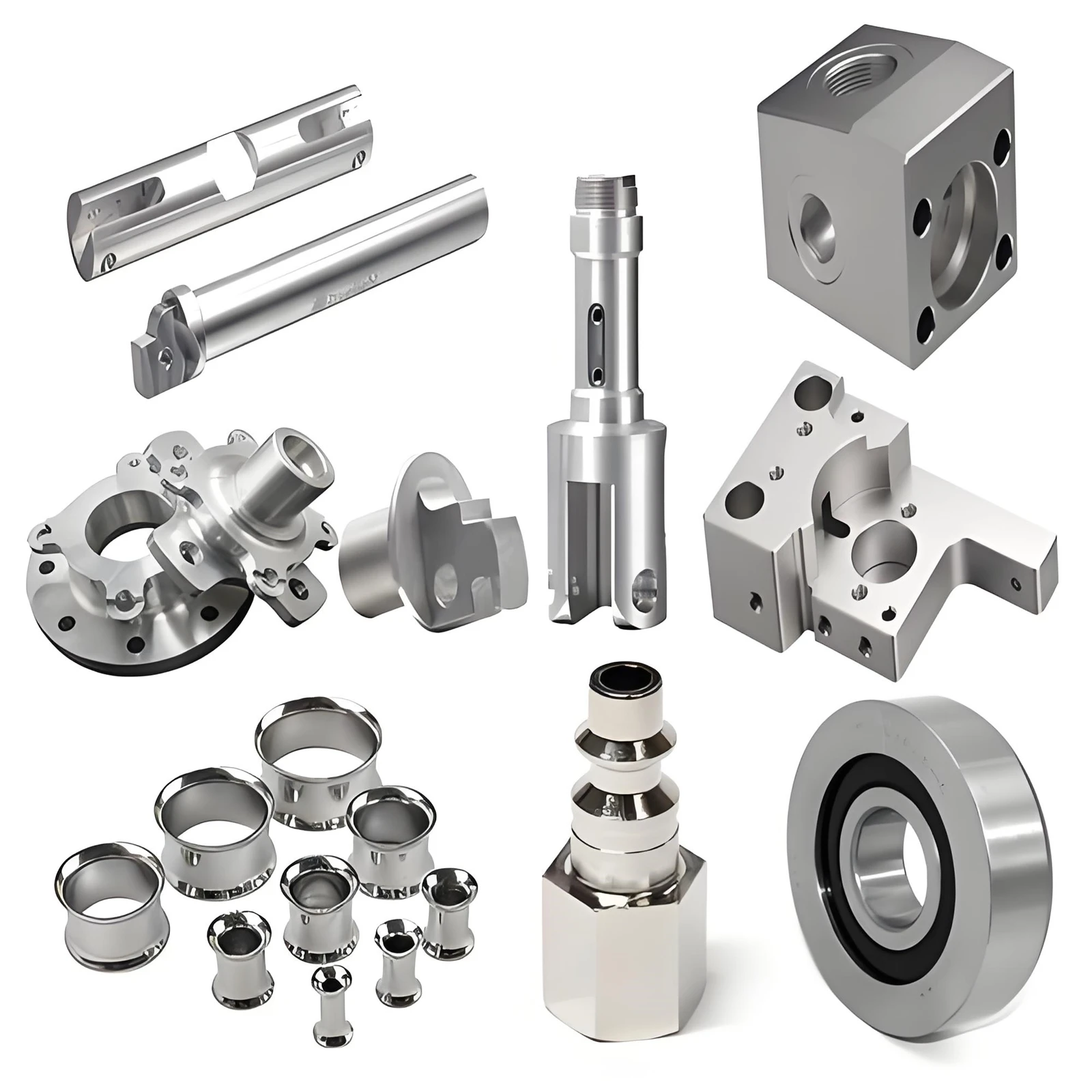
Aircraft CNC Machining Parts
Sourcing aircraft CNC machining parts comes with almost no room for error. A structural bracket out of tolerance by a

Tight Tolerance CNC Machining
Tight tolerance CNC machining delivers the dimensional precision required for the most demanding applications,
Stainless Steel CNC Parts Processing
We deliver high-quality stainless steel CNC parts to manufacturers in electronics, telecommunications, medical devices,

Aerospace CNC Machining Services
Our capabilities cover a wide range of materials including Aluminum (6061, 7075), Titanium (Ti-6Al-4V), Stainless