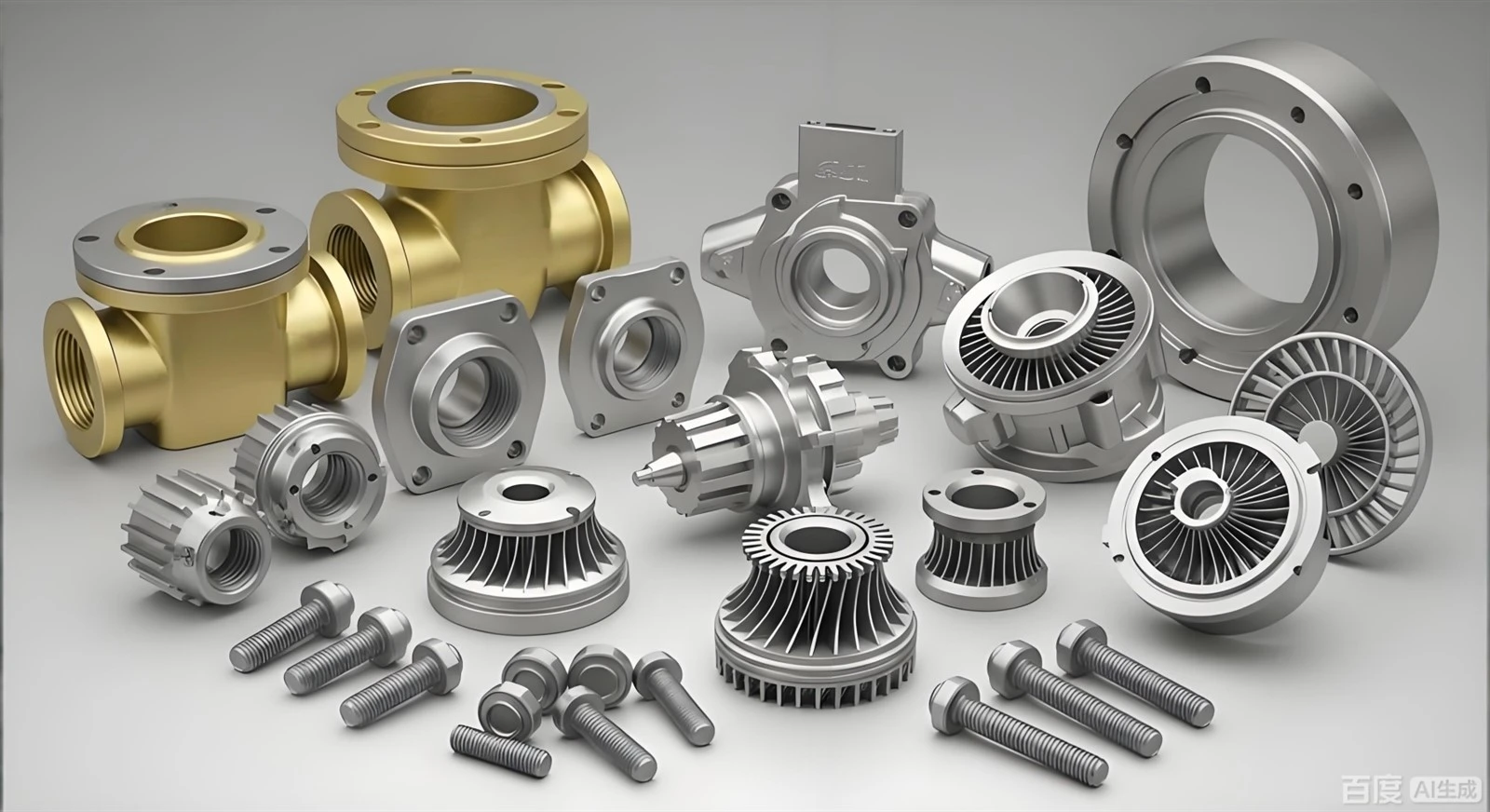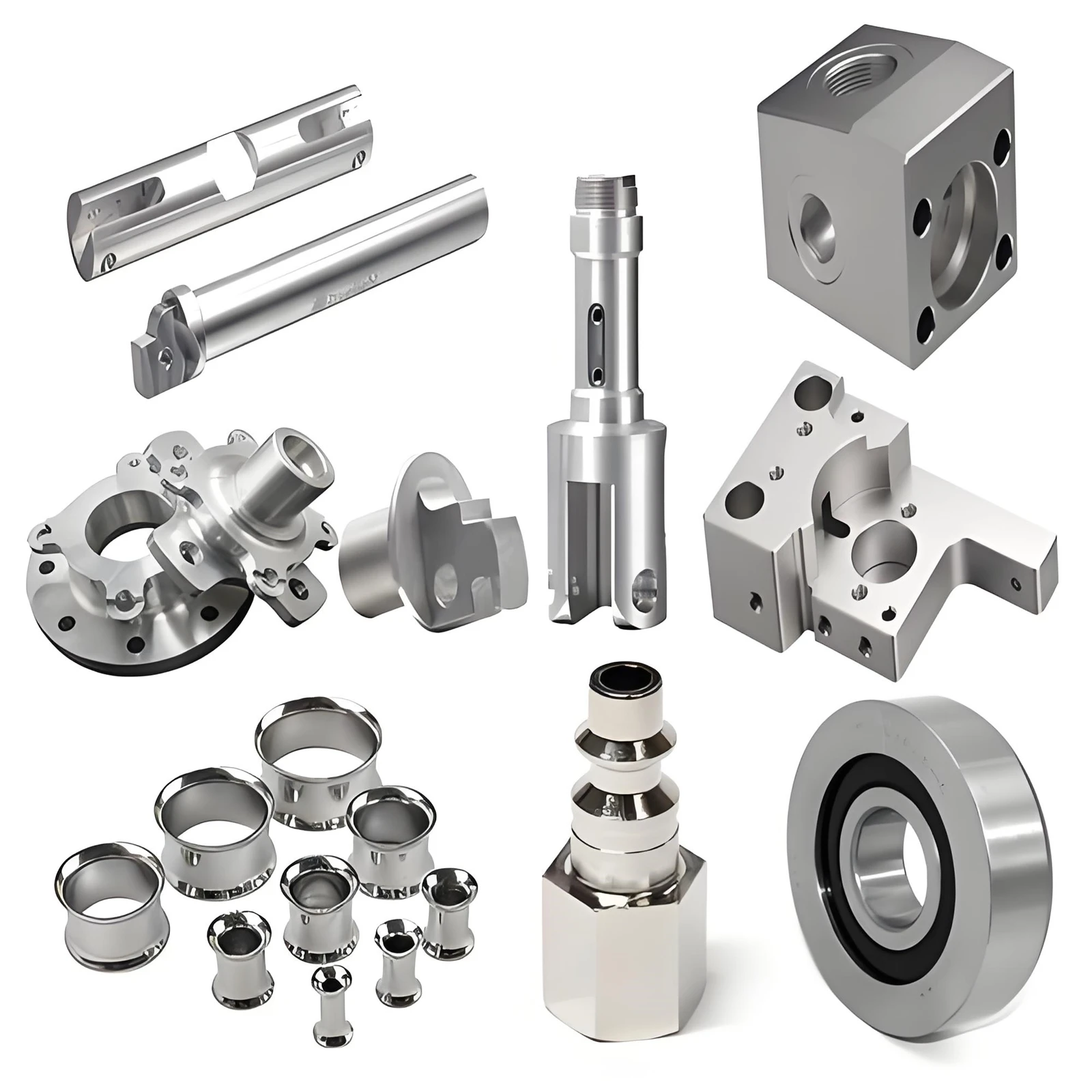

一, The main idea behind CNC machining technology is that automation leads to a revolution in efficiency.
The main idea behind CNC machining is to use digital programmes to control the movement of machine tools so that raw materials can be turned into final items automatically. As an example, the five-axis linkage machining centre can control the three linear axes (X, Y, and Z) and the two rotating axes (A and B) at the same time to make complex surfaces in one go. This technology feature cuts down on the need for people to become involved directly:
Programmed operation: The machining route, cutting parameters, and other settings are defined in advance using CAM software. The operator simply needs to clamp the workpiece, start the programme, and keep an eye on the equipment. Compared to typical lathes, the time it takes to machine a single piece is cut by 40% to 60%.
Smart tool changing system: The automatic tool library may hold dozens of tools and change them automatically based on programme instructions. This means that you don't have to change tools by hand as often as you do in traditional machining. The time it takes to change one tool goes from 3 to 5 minutes to 10 seconds.
Integration of online detection: Some high-end CNC machine tools come with laser probes or visual inspection systems that can measure dimensions in real time while the machine is working. This means that human quality checks don't have to happen as often. An integrated testing system has cut the need for manual quality checks by 75% on a gearbox housing production line, for example.
二, Comparing the costs of labour in different situations for processing auto parts
1. Made-up pain points of old ways of processing
For example, typical machining of engine cylinder blocks needs more than ten steps, like milling, drilling, and tapping. Each step needs a separate person to do it:
High skill dependence: Operators need to learn how to use different machine tools, which can take up to 1–2 years of training.
High labour intensity: doing the same thing over and over again, such manually clamping and measuring, can make you tired, and the fault rate goes up as the hours worked increase.
Cost of connecting multiple processes: Up to 30% of the time spent on transportation and waiting between processes is wasted, and the labour idle rate is high.
2. Manual optimisation of the CNC machining mode
After switching to CNC machining, the production process for the same cylinder body can be combined into:
Managing several machines with one person: One operator can keep an eye on 3 to 5 CNC machine tools at once, which raises equipment use to over 85%.
Change in skill demand: The job of the operator has changed from "machine operator" to "programme monitor," and the training term has been cut down to 1 to 3 months.
Flexible production support: By changing the programme, product models can be switched without having to change the fixtures, which saves time and money on mould replacement. For instance, a new energy vehicle manufacturer cut the time it took to change moulds from four hours to twenty minutes after switching to a CNC flexible production line. This saved 60% of its labour costs.
三, Examination of principal determinants influencing labour expenses
1. Investing in equipment and taking advantage of economies of scale
The initial cost of CNC machine tools is rather high (approximately 2–5 million yuan/unit for five-axis machining centres), but over time, labour expenses can be shared in the following ways:
Improvement in unit time output: CNC machining is 2 to 3 times faster than older methods, and one machine can do the work of 2 to 3 people.
Batch economy: During mass production, fixed costs like programming and debugging are spread out evenly, which makes individual labour costs much lower than they would be using traditional methods. For instance, if a given transmission shaft production line makes more than 100,000 parts a year, CNC machining costs 35% less than other methods.
2. The cost of labour and the complexity of the process
CNC machining is clearly better at making high-precision and complicated structural parts, like turbocharger blades, because it costs less to hire people to do it.
Guarantee of accuracy: CNC machining is accurate to within ± 0.01mm every time, which cuts down on the number of times you have to fix things by hand. In a case of processing blades, CNC technology cut the time it took to fix mistakes by hand from 8 hours to 0.5 hours each piece.
Controlling the scrap rate: Automated processing lowers the scrap rate from 5%–8% in traditional mode to less than 0.5%. This also lowers the amount of work that needs to be done again.
3. Costs for maintenance and technical support
Professional technicians are needed to keep CNC machines running, although the following ways might help improve the process:
Preventive maintenance: IoT systems that keep an eye on the status of equipment in real time cut down on unplanned downtime by 50%.
Modular design: Modern CNC machine tools have a modular construction, which means that just the faulty module needs to be replaced during maintenance. This cuts maintenance time by 70%.
四, Useful ways to save labour costs
1. Smartly upgrading the production line
Introducing robots for industry: Putting robots between CNC machine equipment to do tasks like loading and unloading, cleaning, and so on, creating a "black light factory" mode. By adding robots to a certain brake disc production process, the amount of physical labour needed has gone down by 90%.
Digital twin technology: Using virtual debugging to improve machining programmes and cut down on-site debugging time. Digital twins are used in a differential housing processing project to cut the time it takes to debug a programme from two weeks to three days.
2. Improving the structure of human resources
Management by skill layers: Operators are split into basic monitoring roles and higher programming roles. Basic positions pay 20% less than regular operators, while advanced positions add more value by making things run more smoothly.
Cross-training: Teach "multi-skilled workers" how to operate CNC machines, do minimal programming, and do basic maintenance. This will make your workforce more flexible.
3. Working together to lower costs in the supply chain
Centralised procurement and sharing: Several businesses buy CNC machines together to lower the cost of using one machine through a sharing approach. In the Yangtze River Delta region, a group of automobile parts companies set up a CNC equipment sharing platform that raised equipment use to 90%.
Outsourcing post-processing services means hiring other companies to do things like polishing and electroplating that aren't part of the main process in the factory. By outsourcing post-processing, a company that makes connecting rods has cut its labour expenses by 15%.