


一, The main parts and criteria of quality inspection
Quality control for automotive CNC machining needs to look at four main areas:
Dimensional accuracy: This includes linear dimensions (like shaft diameter and aperture), angles, positional tolerances (like coaxiality and perpendicularity), and so on. These must all be within the tolerance range shown on the drawing (for example, ± 0.01mm).
Geometric tolerances like roundness, flatness, and cylindricity have a direct effect on how well pieces fit together and how stable they are when they move. For instance, the engine crankshaft's cylindricity error must be kept to 0.005mm or below.
Surface quality: keeping the oxide layer even, the roughness of the surface (Ra value), and getting rid of scratches, burrs, and other flaws. To lower friction and wear, the surface roughness of the aluminum alloy cylinder body must be less than Ra0.8 μ m.
Material qualities including hardness, tensile strength, chemical makeup, and others must meet material criteria. For instance, the hardness of high-strength steel parts needs to be between 58 and 62HRC to make sure they don't wear out.
二,Putting into place Full Process Quality Inspection Technology
1. Quality Control for Incoming Goods (IQC): Keeping track of the quality of materials
Check the surface of the raw material for flaws like cracks, oxidation, oil stains, and so on with a magnifying glass or by looking at it.
Checking the size: Using vernier calipers and micrometers, we randomly check important measurements such plate thickness and bar diameter.
Analysis of composition: Quickly check the material grade with a spectrometer (such the HITACHI X-MET800) to stop the practice of "passing off bad products as good." For instance, to fix the problem of quickly oxidized material patches in 7075 aluminum alloy, it is important to get materials from the source and do trial oxidation tests.
2. First Article Inspection (FAI): 2. First Article Inspection (FAI): The "touchstone" before making a lot of them
Check the program: Make sure that the CNC software, tool choice, and clamping method all satisfy the needs of the process.
Measuring the full size: Use a coordinate measuring machine (CMM) to check the three-dimensional size of the first component and make sure that all of the important tolerances, including the placements of holes and the variances in steps, fulfill the design requirements. For instance, when machining a gearbox housing, CMM inspection made the dimensions 90% more accurate and cut the scrap rate to 0.8%.
Checking the quality of the surface: Check for scratches and burrs by looking at the surface and measuring its roughness to make sure there are none.
3. Process Inspection (IPQC): Watching the machining process in real time
Every two hours, random parts from the production line are tested for size and position tolerance using equipment like calipers and micrometers.
Monitoring parameters: Checking the speed, feed rate, and tool wear status of machines in real time to avoid quality problems caused by parameter drift. For instance, when machining a turbocharger blade, the surface roughness stays within Ra0.4 μ m by keeping an eye on the cutting settings.
Quick response to problems: If something goes wrong, stop the machine right away, figure out what's wrong (like worn-out tools or loose fixtures), and change the process settings.
4. Final Inspection (FQC): The last step before the finalized product leaves the warehouse
Taking samples of the whole thing: Using tools like cylindricity meters and projectors to find the shape and position tolerances of complicated structural pieces that meet AQL criteria.
Check the look: There is a 100% manual check of the surface for "three damages" (abrasion, collision, hanging), and operational damage is avoided by using vacuum box shipping and standard packaging.
Functional testing: To make sure that the seals and transmission shafts are reliable under real-world settings, test their airtightness and torque.
三,Situations where high-precision detection technologies can be used
Coordinate Measuring Machine (CMM): Good for checking the three-dimensional dimensions of complicated curved objects, including engine cylinder heads, with an accuracy of 0.5 μ m+0.5 μ m/m.
An image measuring tool is used to measure two-dimensional contours, such the profile of a gear tooth. It uses optical magnification technology to do this without making touch.
Laser scanner: quickly scans the surface of huge covers, like body sheet metal, to find deformation.
Ultrasonic testing is a way to find flaws like internal cracks and pores in materials. It is a good way to test high-strength steel items without damaging them.
Testing tools for hardness and wear resistance: Check to see if the material hardness matches the design criteria and guess how long the pieces will last before they wear out.
四,Intelligence and Digitization Improvement of Quality Inspection
Online detection system: a system that uses machine tool probes and machine vision technologies to control "machining measurement compensation" in a closed loop. After a precision mold firm started using the Renishaw probe system, the accuracy of mold insert processing improved by 60%.
Big data analysis platform: The SPC (Statistical Process Control) system lets you input detection data in real time, makes control charts to keep an eye on process stability, and warns you of possible problems early on.
AI-assisted detection: Deep learning algorithms automatically find surface defects like scratches and burrs and offer ways to fix them. This makes detection more than 10 times more effective.
五, System for Management Standardized Operating Procedure (SOP) for Quality Inspection: Make clear how to use tools, how to measure things, and how to make decisions by writing down precise testing operating procedures.
Training and testing of staff: Quality inspection staff should be trained regularly on how to use new equipment and how to find defects. They should then take their jobs after passing the test.
Quality traceability system: To get full lifecycle quality traceability, keep track of the inspection data, operator, and equipment information for each part.
Continuous improvement mechanism: Look at quality data on a regular basis, find the main causes of errors (such changes in temperature and tool wear), and make process parameters and testing plans better.
How To Conduct Quality Inspection During The CNC Machining Process Of Automobiles?
Popular Products

Cnc Machined Car Parts
CNC machined automobile parts are pieces of cars that are created by employing CNC machines to precisely cut metal...

Prototype Cnc Milling
Prototype Machining, also known as CNC prototyping or rapid prototyping, is the process of quickly making prototype...
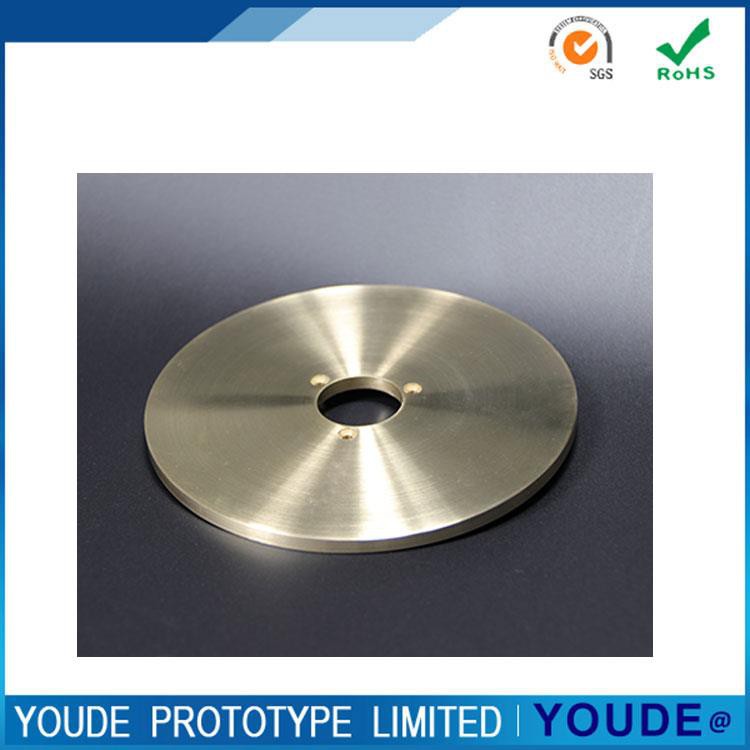
Cnc Car Parts
Advantages and Features High precision machining capability CNC machining can strictly control dimensional...

Prototype Machining
Prototype machining, sometimes called prototyping, CNC prototyping, or rapid prototyping, is a way to make...

Cnc Automotive
Advantages and Features High precision and strict tolerance control CNC automotive machining can regulate precision...

Automotive Cnc
Benefits and Features High precision and high consistency Automotive CNC machining can manage precision down to the...