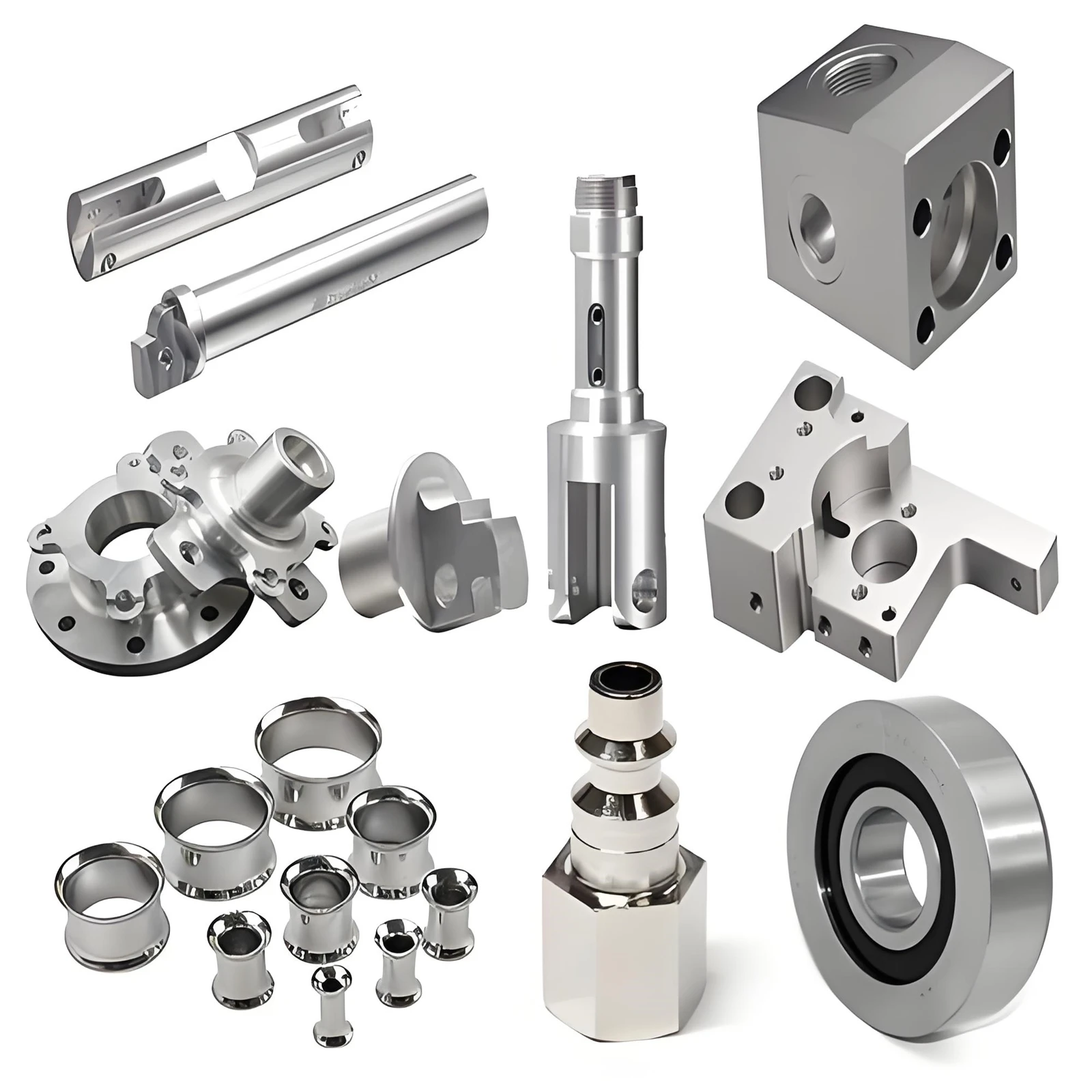

Material Strength and Functional Performance
Fast CNC Machining holds a clear advantage when real mechanical performance is critical.
CNC starts with solid stock - aluminum, stainless steel, titanium, or high-performance plastics - producing fully isotropic parts with consistent strength in all directions. This allows reliable functional testing under actual load, vibration, heat, or fatigue conditions.
In contrast, most 3D printed parts (especially FDM) are anisotropic, with significantly weaker Z-axis strength due to layer bonding. Even advanced processes like Carbon Fiber SLS or MJF rarely match the mechanical reliability of machined components.
Real project example: In a 2025 EV sensor housing project, a client switched from 3D printed nylon prototypes (which cracked during vibration testing) to CNC-machined aluminum. The CNC parts passed all validation tests on the first try, saving two full iteration cycles and accelerating the program by three weeks.
For any prototype that must simulate production materials or withstand real-world stresses, Fast CNC Machining is usually the superior choice.
Precision and Surface Quality
Precision and surface quality represent one of the most decisive areas where CNC vs 3D Printing favors CNC.
CNC machining routinely achieves tolerances of ±0.05 mm to ±0.01 mm with excellent repeatability. Surface finishes of Ra 0.8–1.6 µm are standard right off the machine, often suitable for functional assemblies without secondary processing.
3D printing typically offers ±0.1–0.3 mm tolerances and visible layer lines that require time-consuming post-processing (sanding, vapor smoothing, coating). These steps add cost and can alter critical dimensions.
Fast CNC Machining benefits are especially clear for snap-fits, sliding mechanisms, or parts that must interface with off-the-shelf components. Better initial quality means fewer design loops and more trustworthy test data.
Cost Analysis
Cost depends on material, quantity, and performance requirements.
3D printing usually wins for 1–5 simple plastic concept models due to zero tooling and very low setup time.
Fast CNC Machining becomes more economical when:
Using metal or engineering-grade plastics
Tight tolerances or excellent surface finish are required
Quantities range from 5–300 pieces
Functional validation is critical
Real insight from our projects: A consumer electronics client found that while a single 3D printed prototype cost 40% less, switching to CNC aluminum prototypes reduced total development cost by 35% because the parts survived testing and moved straight into low-volume production.
Comprehensive Comparison Table
|
Factor |
Fast CNC Machining |
3D Printing |
Winner for Functional Prototypes |
|
Material Strength |
Excellent (isotropic, production-like) |
Fair to Good (often anisotropic) |
CNC |
|
Precision/Tolerances |
±0.01–0.05 mm |
±0.1–0.3 mm |
CNC |
|
Surface Quality |
Excellent (Ra 0.8–3.2 µm) |
Fair (needs post-processing) |
CNC |
|
Functional Testing |
Excellent |
Limited for critical/mechanical tests |
CNC |
|
Lead Time (1–10 pcs) |
3–7 days |
1–4 days |
3D Printing (simple parts) |
|
Cost for Metal Parts |
Highly competitive |
Very high / limited options |
CNC |
|
Best For |
Functional metal/plastic prototypes, validation |
Concept models, simple fit checks |
- |
When to Choose Each Process by Project Stage
Early Concept & Visual Models → 3D Printing Ideal for quick form, fit, and aesthetic checks.
Functional & Mechanical Validation → Fast CNC Machining Real materials and precision deliver trustworthy test results.
Pre-Production & Assembly Testing → CNC (or hybrid approach) CNC parts closely represent final production intent.
Low-Volume Production (10–500 pcs) → Fast CNC Machining Best balance of cost, quality, and consistency.
Hybrid tip: Many successful projects use 3D printing for early concepts and switch to Fast CNC Machining once functional testing begins. This combination often delivers the fastest overall timeline.
CNC vs 3D Printing is not about which technology is better overall - it's about choosing the right tool for the job. While 3D printing excels at quick visual models, Fast CNC Machining provides superior Rapid prototyping options when strength, precision, surface quality, and reliable functional testing are essential.
The Fast CNC Machining benefits - production-like parts, reduced iteration cycles, and faster path to validation - frequently save weeks in overall product development.
Ready to choose the best process for your project? Upload your drawing here for a free DFM review and Fast CNC Machining quote. Our team will recommend the optimal approach - CNC, 3D printing, or a hybrid - to get you high-quality prototypes faster.
FAQ
Q: Is Fast CNC Machining always more expensive than 3D printing?
A: No. For metal parts or when functional testing is needed, CNC often delivers better overall value.
Q: How do I decide between CNC and 3D Printing?
A: Prioritize material, tolerance, and testing requirements. Use the table above as your guide.
Q: Can CNC and 3D printing be used together?
A: Yes - many teams use 3D printing for early concepts and CNC for functional validation.