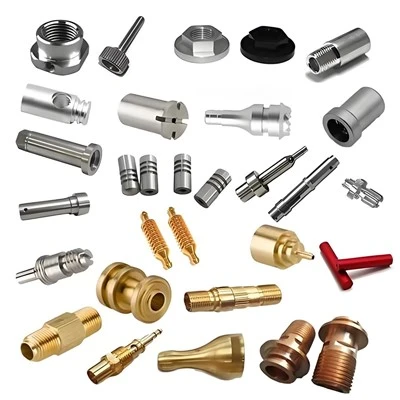

The Phone in Your Hand How Much of It Is Actually CNC Machined?
The metal shell forms a major part of the smartphone's structural and aesthetic backbone. It protects internal components while delivering the slim profile and premium feel that consumers expect. In many flagship models, a significant portion of the visible metal structure involves CNC Machining, but the exact approach varies by brand, volume, and positioning.
The global market for smartphone metal enclosures has grown steadily, driven by demand for premium designs. According to IDC data, premium segments continue to favor high-precision processes like CNC for differentiation. Behind the seemingly simple exterior lies a complex manufacturing decision balancing performance, cost, and scalability.
What Does a Phone Metal Shell Actually Need to Do?
Structural Strength - Protecting What's Inside
The shell must survive rigorous drop tests (often 1.5–2 meters on multiple surfaces), maintain rigidity with thin walls (frequently under 1mm), and resist bending. In our projects, inconsistent geometry here frequently leads to frame deformation or internal component damage.
Aesthetic Requirements - Why "Premium Feel" Matters
Consumers judge devices instantly by touch and appearance. The shell needs a smooth, uniform surface suitable for anodized aluminum enclosure CNC service, free of visible defects like porosity or flow lines that undermine perceived quality.
Functional Requirements - Antenna, Heat, Buttons
The shell must incorporate precise antenna windows for 5G/6G signal performance, optimized heat dissipation paths, and accurately placed button cutouts. These functional needs heavily influence process selection.
These combined requirements explain why choosing the right manufacturing method is a critical - not automatic - decision.
So, Does a Metal Phone Shell Have to Be CNC Machined?
No, it does not have to be. However, CNC Machining is frequently the optimal or necessary choice depending on the project. From our observation across multiple smartphone programs, the decision hinges on design complexity, production volume, precision targets, and market positioning.
When CNC Machining Is the Right Call
CNC excels during metal shell prototype machining for smartphones, small-to-medium batches, highly complex geometries, and when ultra-tight tolerances are critical. It provides unmatched design flexibility for rapid iterations without expensive tooling.
When Other Methods Work Just Fine
For ultra-high volumes, die casting combined with secondary CNC finishing is often more economical. MIM suits smaller intricate components. The key insight: matching the process to specific needs delivers better overall results than defaulting to CNC.
Common misconception: CNC always equals higher cost and die casting always equals lower quality. In practice, hybrid approaches often provide the best balance.
CNC Machining vs. Other Manufacturing Methods A Real Comparison
Here is a practical comparison for CNC vs die casting for phone housing:
|
Process |
Precision |
Surface Quality |
Design Flexibility |
Best Volume |
Unit Cost |
Waste Rate |
|
CNC Machining |
Excellent (±0.01mm) |
Outstanding |
Very High |
Prototypes to Medium |
Higher |
Higher |
|
Die Casting |
Moderate |
Requires finishing |
Moderate |
Very High |
Lower |
Lower |
|
MIM |
Good |
Good |
High (small parts) |
Medium |
Medium |
Low |
|
Stamping |
Low–Moderate |
Average |
Low |
High |
Lowest |
Low |
|
Forging |
Good |
Good |
Moderate |
Medium to High |
Medium |
Low |
Why Most Premium Phone Brands Still Use CNC (At Least in Part): Brands like Apple and Samsung commonly employ hybrid strategies - die-cast bases with extensive CNC machining for critical surfaces and features. This approach combines cost efficiency at scale with the precision and surface quality needed for flagship products. Precision CNC machining electronics parts manufacturer capabilities remain essential for final tolerances and aesthetics.
Materials Used in CNC Machined Phone Metal Shells
Aluminum Alloys - The Industry Default
Aluminum dominates due to its excellent strength-to-weight ratio and machinability.
|
Material |
Density (g/cm³) |
Strength/Hardness |
Machinability |
Relative Cost |
Best Use Cases |
|
Aluminum 6061 |
~2.70 |
Medium |
Excellent |
Lower |
Most consumer shells; superior anodizing |
|
Aluminum 7075 |
~2.81 |
High |
Good |
Higher |
High-strength or ultra-thin designs |
Titanium - The Premium Choice
Titanium (Ti-6Al-4V) offers superior strength-to-weight and corrosion resistance but is significantly more difficult and expensive to machine. It is typically reserved for flagship models seeking clear differentiation.
Stainless Steel & Magnesium Alloys
Stainless steel provides excellent durability for select components but adds weight. Magnesium alloys are very lightweight yet present unique corrosion protection and machining challenges.
Material Compliance - RoHS, REACH & Beyond
Reliable high-precision CNC parts supplier for mobile devices maintain full traceability and comply with RoHS, REACH, and other regional regulations - non-negotiable for global market access.
The CNC Machining Process for a Phone Metal Shell Step by Step
Design File Preparation (CAD/CAM)
Engineers start with detailed 3D CAD models. These are converted into optimized CAM toolpaths tailored to the material. In our experience, early DFM feedback at this stage prevents many downstream issues.
Fixturing and Multi-Axis Milling
Secure fixturing with 5-axis CNC machines enables complex contours, thin walls, and precise features in fewer setups. This is especially valuable for aluminum phone shell CNC machining factory work.
Deburring, Polishing, and Surface Treatment
Post-machining involves deburring, sandblasting or polishing, followed by anodizing, PVD coating, or other finishes for aesthetics and protection.
Inspection & Dimensional Verification
CMM inspection verifies critical dimensions, typically targeting ±0.01mm to ±0.05mm on key features.
Tolerances and Quality Standards That Actually Matter
Tight tolerance metal shell machining service for phones commonly requires ±0.01mm to ±0.05mm on mating surfaces. These tolerances directly impact assembly reliability and long-term performance.
Suppliers should hold ISO 9001 and IATF 16949 certifications, plus RoHS/REACH compliance. Procurement teams should always request CMM reports and material certificates to reduce risks.
FAQ
Q: Is CNC machining necessary for all metal phone shells?
A: No. It is often optimal for precision and complexity, but hybrid or alternative processes work well for high-volume, simpler designs.
Q: What's the difference between a CNC machined and die-cast phone housing?
A: CNC delivers higher out-of-machine precision and surface quality. Die casting excels at high volumes but typically requires secondary CNC finishing for critical areas.
Q: Which aluminum alloy is best for a phone metal shell?
A: 6061 offers the best overall balance for most applications. 7075 is preferred when higher strength is needed in thinner constructions.
Q: How tight are the tolerances for CNC machined phone enclosures?
A: Typically ±0.01mm to ±0.05mm on critical features, with tighter tolerances possible on key mating surfaces.
Q: What surface finishes can be applied to a CNC machined phone shell?
A: Anodizing in various colors, sandblasting, brushing, polishing, and PVD coatings.
Q: How long does it take to prototype a metal phone shell with CNC?
A: Usually 7–21 days, depending on complexity and shop workload. Specialized services can accelerate this.
Q: Is CNC machining cost-effective for small-volume phone shell production?
A: Yes. It avoids expensive tooling and provides excellent flexibility for CNC machining small batch phone housing.
Q: What certifications should a CNC machining supplier have for consumer electronics?
A: ISO 9001, IATF 16949, RoHS, REACH compliance, and strong material traceability.
CNC Machining is not mandatory for every phone metal shell, but it remains a powerful and often essential tool for achieving premium quality, precision, and design freedom. The smartest manufacturers select - or combine - processes based on specific project goals rather than following rules of thumb.
If you are evaluating options for your next product, an experienced precision CNC machining electronics parts manufacturer can provide valuable DFM guidance tailored to your needs.
Need support with custom metal enclosure CNC machining service or help deciding the optimal process for your phone housing? Feel free to reach out - we're happy to discuss your project specifics and find the most suitable solution.